


And-Sons/h3 Tasting Notes: Decoding Flavor Maps Like a Pro
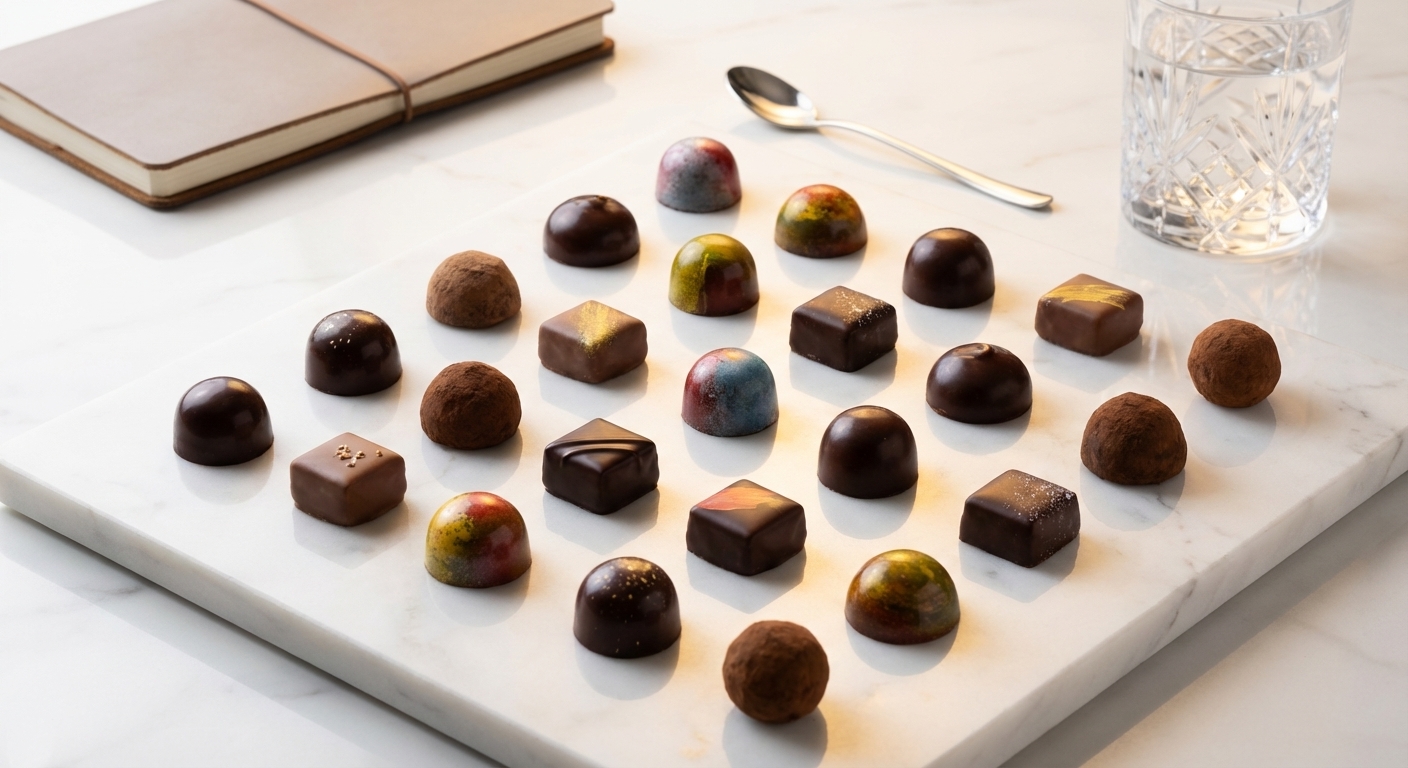
Learn to decode the h3 collection's flavor architecture by letting each bonbon melt slowly, tracking cacao, nut and fruit notes as they peak and fade. Master this quiet ritual and every piece becomes a curated sensory event, turning gift or self-indulgence into polished discernment.
Understanding the Flavor Architecture of and-sons/h3
Slow-melt an h3 bonbon, exhale through your nose, and you'll watch cacao, nut, and fruit notes arrive in sequence while secondary jasmine or cardamom sparks emerge--predictable to the brain's neural map--turning each bite into a timed flavor curve instead of a flat chocolate lump.
Mapping Primary Flavor Profiles
The h3 collection's primary flavors organize around three identifiable anchors: cacao intensity, nut-based foundations, and fruit-forward contrasts.
A 64% Madagascar dark chocolate ganache delivers straight cocoa depth with minimal interference, while the Double Milk Chocolate layers 40% and 33% cacao for a graduated, less bitter sweetness. [1] Nut profiles -- hazelnut gianduja, almond praline, and pecan croquant -- function as mid-palate bridges that soften transitions between sweet and bitter registers. [1] One taster observed that each bonbon carries its own "flavor curve," where individual notes arrive, peak, and recede in sequence rather than merging into a single flat impression. [2]
Identifying Secondary Nuances
Secondary nuances in a well-constructed bonbon emerge during the mid-melt and finish -- the window after primary flavors peak but before they recede.
The chocolate flavor wheel organizes these subtler impressions into categories like floral, earthy, spicy, caramel, and dairy, each branching into more specific notes such as jasmine, cardamom, or butterscotch that only surface when chocolate melts slowly without chewing. [4] The International Institute of Chocolate & Cacao Tasting models flavor relationships using a neural network, positioning notes based on how the brain actually processes them -- so secondary nuances that co-occur in a given piece are structurally predictable, not random. [5] Exhaling through the nose after each melt activates retronasal pathways, making these quieter notes perceptible without any specialized equipment. [5]
Applying Professional Tasting Techniques to the h3 Collection
Create a neutral, scent-free tasting space, strip away labels, and let each bonbon melt slowly with closed eyes to map every nuanced shift from snap to lingering finish.
Step‑by‑Step Sensory Evaluation
A structured h3 evaluation begins before tasting: select a neutral-smelling, distraction-free space and avoid strong food or drink for at least an hour prior, since ambient odors and residual flavors measurably disrupt aroma detection. [7] Remove all packaging and taste blind to eliminate label bias, then assess each bonbon visually for gloss and uniformity before breaking it -- a sharp, clean snap confirms proper tempering. [6] Smell each piece before it contacts the palate, then allow it to melt without chewing while breathing steadily so aromatic compounds build gradually in the mouth rather than releasing all at once. [7] Closing your eyes during the melt sharpens other sensory channels and helps you track how flavors shift from initial impression through finish. [7]
Curating the Perfect Gift Experience with and-sons/h3
Elevate your gift-giving with and-sons' Signature Collection--22 rotating artisanal bonbons in gift-ready, foil-stamped packaging that ships nationwide, complete with tasting notes and décor tips to turn unboxing into a curated ceremony.
Selecting the Ideal Box for Luxury Givers
For luxury gift givers, the Signature Collection represents the most comprehensive introduction to our range -- over 22 rotating flavors spanning European-style ganaches, fruit-forward confections like Double Yuzu and Passion Fruit, and nut-based pralines, all made in small batches using fresh dairy and ethically sourced cacao. [8] Seasonal rotation keeps the assortment current, which matters when a gift reflects the giver's discernment as much as the recipient's preference. [8] For further guidance on matching box format to occasion, this chocolate box selection guide can help narrow options before ordering.
The foil-stamped, gift-ready packaging ships nationwide, so presentation quality holds whether the box travels across town or across the country. [8]
Presentation Tips for High‑End Gifting
Physical presentation details carry as much weight as box selection when gifting at a high level.
Satin or velvet ribbons introduce tactile ceremony before the lid opens, while food-safe interior inserts position each bonbon as an individual piece rather than part of a crowded assortment. [9] For ideas on taking arrangement further, chocolate decoration techniques offer visual refinements that work within any box format.
Pairing the collection with a printed tasting guide transforms the experience into something closer to a curated event, giving recipients context for each flavor's origin and character. [9] For corporate or executive recipients, a brief handwritten note expressing specific appreciation does more relational work than any additional packaging element. [9]
- h3 flavors center on cacao intensity, nut bases, and fruit contrasts
- Secondary notes emerge mid-melt: floral, earthy, spice, caramel, dairy
- Professional tasting: neutral room, blind, melt without chewing, exhale nose
- Clean snap and glossy surface signal proper chocolate tempering
- Gift impact hinges on tactile ribbons, inserts, and a handwritten note
- https://and-sons.com/pages/flavors?srsltid=AfmBOoq4kt20tfHMU-mQ2nQdUKes6Dd-T0yv8xu94O_hiLhYl0f4HNST
- https://www.serenassweetshop.com/post/the-great-chocolate-tour-continued-andsons-again
- https://and-sons.com/blogs/journal/chocolate-tasting-guide-how-to-evaluate-and-enjoy-confections?srsltid=AfmBOoqQMc1z9C4lQ0Qlvt9zZU0PMTCxNfFDa2W64lhNzpdoUuJhjAk4
- https://amanochocolate.com/how-to-taste-chocolate-with-the-chocolate-flavor-wheel/?srsltid=AfmBOopkUa5h0YS1EVL0WbHusS24sf6Rndz-KTfwnV5k0Ygbvl7W1nWF
- https://www.chocolatetastinginstitute.org/chocolate-and-cacao-flavor-profile-map/
- https://www.barry-callebaut.com/en-US/trends-insights/how-taste-chocolate
- https://www.puratos.us/en/blog/how-to-describe-chocolate-like-a-professional
- https://and-sons.com/products/signature-box?srsltid=AfmBOortkiBcbUKmmjRYImwJRWwm4V48G5inAAfWfTAgrjdaIEoqbGGh
- https://and-sons.com/blogs/journal/chocolate-gift-boxes-101-ideas-packaging-tips-and-presentation?srsltid=AfmBOorriFa7E4nKCLS_yn6aH2nOVKbKB9347cNMKP7AqAwsj4ICWOn5