


Top Chocolate Mold Shapes for Stunning Confections
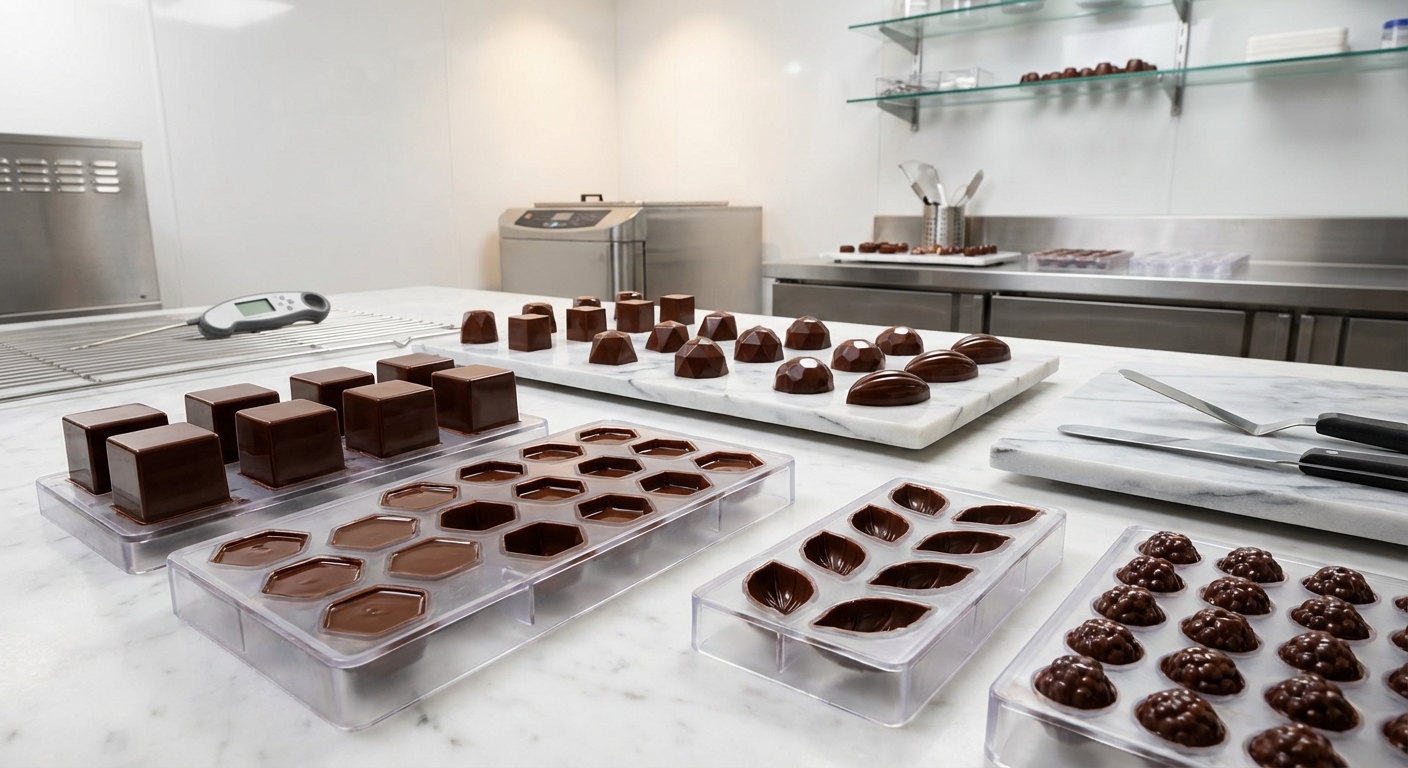
Mastering chocolate mold shapes is the secret to crafting confections that dazzle the eye and delight the palate, because every curve, angle and surface area manipulates how flavor unfolds and how sweet or bitter the brain expects a bite to be. This article equips chocolatiers--from Beverly Hills boutiques to home kitchens--with the science behind thin, fast-melting rounds that amplify tart fillings versus thick, slow-release squares that stretch caramel's buttery notes, and it pinpoints why polycarbonate molds win among pros for mirror shine and effortless demolding. Readers will discover the hottest 2025 trends--geometric cubes and hexagons that stack like edible architecture, nature-inspired leaves and pinecones that telegraph eco-chic or holiday spirit, and minimalist bars ready for bold flavor pairings--while learning to match fluidity, temperature and filling placement so every cavity releases flawlessly. Step-by-step, it walks through tempering, piping, vibrating out air bubbles, and reading the telltale cloudy bottom that signals perfect contraction, then details mold-specific cleaning, storage and rotation schedules that extend tool life and guarantee consistent gloss. Whether you want to photograph viral bonbons, launch seasonal collections without redesigning your line, or simply stop wrestling stubborn releases, these shape-driven techniques and maintenance rituals turn quality couverture into professional-grade jewels that snap, shine and sell themselves.
Choosing the Right Chocolate Mold Shapes for Your Confection Goals
Match your chocolate's shape to its filling--round molds for instant flavor bursts, square for slow-melting caramels--and use polycarbonate molds with fluid chocolate for flawless shine and clean release.
Understanding Shape Impact on Texture and Presentation
Chocolate shape influences both how it tastes and how consumers perceive it. The physical form of your chocolate directly affects its melting rate, which controls flavor release and intensity [1]. Thinner shapes melt faster, delivering immediate flavor impact, while thicker forms create a gradual flavor development that unfolds more slowly on the palate.
The psychology behind shape is equally important. Research shows consumers expect round chocolates to taste sweeter, less bitter, and creamier than angular-shaped pieces [2]. This expectation affects their actual tasting experience through what scientists call synaesthesia--where one sensory input influences another [3].
Surface area plays a critical role in flavor intensity. Shapes with larger surface areas release flavor molecules more rapidly, creating a more immediate sensory impact [3]. In our Beverly Hills atelier, we've found that strategically matching shape to filling creates memorable experiences--square molds work beautifully for caramels that benefit from slower melting, while round molds enhance tart fillings where immediate flavor impact elevates the experience [2].
Key Factors When Selecting Mold Materials and Sizes
The material you choose directly affects your chocolate's appearance and ease of production. While we explore mold materials in detail in our maintenance section, it's essential to understand that polycarbonate molds yield superior gloss and contract more slowly than chocolate, making demolding easier [4]. They're preferred by 70% of professional chocolatiers for creating flawless, shiny finishes [5]. Your chocolate's flow properties must match your mold's complexity.
For detailed molds, choose a fluid chocolate with three-drop or four-drop fluidity--industry terms describing how easily chocolate fills intricate cavities [4]. Temperature control proves critical: warm molds slightly before pouring to prevent temperature shock, and keep fillings below 28 degreesC to preserve shell integrity [4]. These fundamentals, covered extensively in our tempering section, form the foundation of professional chocolate making. Size selection affects both visual impact and practical handling.
Small, intricate molds demand more technical skill but create elegant pieces, while larger molds allow for dramatic presentation. When working with filled chocolates in any size, prevent filling from touching mold rims to avoid leaks that compromise appearance [4]. Fill each chocolate shell individually rather than mass-filling to maintain quality control across your entire production [4].
Trending Chocolate Mold Shapes That Elevate Modern Desserts
Geometric molds--cubes, pyramids, hexagons--now dominate luxury chocolate because their crisp lines guarantee Instagram-ready visuals, perfect portion control, and flawless release that lets Beverly Hills chocolatiers stack, pack, and sell modern flavor innovations faster than ever.
Geometric and Minimalist Designs for Contemporary Palates
Geometric molds featuring cubes, pyramids, and hexagons have emerged as leading trends for their clean, modern aesthetic that appeals to contemporary tastes. These precise shapes offer practical advantages beyond visual appeal--they stack neatly for transport, create consistent portion sizes, and fit elegantly into sleek packaging [6]. The smooth, defined lines of geometric chocolates create a sophisticated presentation that photographs well for social media, driving their popularity among luxury chocolatiers who understand that presentation elevates the entire tasting experience.
Minimalist designs have gained particular traction, with simple forms like the Mini Chocolate Bar embodying this aesthetic while offering versatility for customization [7]. At andSons, we've found these contemporary geometric shapes perfectly complement our modern bonbon collection, allowing the quality of fine chocolate to shine through clean, architectural forms.
The appeal extends beyond pure aesthetics--geometric molds with their smooth surfaces allow for clean release and faster production, essential for maintaining the pristine finish expected in Beverly Hills confections. In 2025, look for delicate, openwork patterns that bring lightness to chocolate designs, combining minimalist principles with subtle detailing that elevates even simple creations [7]. These contemporary designs work particularly well with unexpected flavor combinations, creating a visual signal of innovation that prepares the palate for modern taste experiences.
Nature-Inspired and Seasonal Shapes for Visual Appeal
Nature-inspired molds create distinctive chocolates that connect with consumers on a deeper emotional level. Leaf designs with their organic veining and natural contours--particularly banana leaf, cannabis leaf, and autumn leaf variants--offer versatility for both everyday treats and seasonal celebrations [9]. These shapes work particularly well for eco-friendly themes and autumn-inspired collections, where their earthy elegance enhances presentation without requiring additional decoration [9]. Drawing from our European heritage, we appreciate how nature-inspired forms honor chocolate's botanical origins while appealing to modern sensibilities.
Fruit and berry molds deliver instant visual recognition while signaling freshness to consumers. Berry-shaped chocolates with textured surfaces create multi-sensory appeal through both appearance and tactile experience when eaten [9], while cherry-shaped confections with their rounded bodies and distinctive stems bring summer vibrancy to chocolate boxes [9]. Pine cone molds offer striking dimensional textures that capture light beautifully, making them standout options for holiday assortments [8]. Animal-shaped chocolates generate immediate emotional reactions, with fish designs proving especially versatile for children's collections and cultural celebrations [9], while more exotic options like monkeys and snakes create conversation-starting centerpieces [10].
Seasonal shapes drive sales by connecting to specific calendar moments--turkeys and three-dimensional skulls for fall celebrations [10], snowflakes and pine motifs for winter holidays. As second-generation chocolatiers, we've learned that using seasonal molds strategically throughout your product cycle creates natural refresh points in your collection without requiring complete line redesigns.
Practical Tips for Using Chocolate Mold Shapes to Achieve Perfect Results
Perfect chocolate molds start with surgical-level prep--scrub, dry, temper couverture to 95-100 degreesF, pipe, tap out bubbles, chill 15 min, then watch for the cloudy bottom that signals a flawless, glossy release.
Preparation, Tempering, and Demolding Best Practices
Precise preparation of molds is critical before introducing chocolate. Clean molds thoroughly with warm, soapy water to remove any dust, fingerprints, or chocolate residue that could prevent proper release. Dry completely--even a single drop of water can cause chocolate to seize [11]. For intricate designs, consider lightly greasing with cocoa butter to facilitate easier release [11]. Proper tempering transforms ordinary chocolate into professional confections with a glossy finish, crisp snap, and resistance to finger-melting [12]. To temper successfully, first select quality couverture chocolate rich in cocoa butter--better than regular chips or bars for molding [12].
Monitor temperature precisely with a culinary thermometer, never exceeding 130 degreesF to prevent scorching [13]. Choose from three proven methods: the double boiler (seeding) approach requires melting two-thirds of your chocolate to 110-115 degreesF before adding the remaining third and cooling to 95-100 degreesF [13]. The marble tabletop method involves pouring partially melted chocolate onto a cool surface, working it until it thickens, then returning it to heat [13]. For beginners, the microwave method offers simplicity--heat two-thirds of your chocolate in short intervals, then add the remainder while stirring [11]. At andSons, our European-trained chocolatiers have perfected these tempering techniques over two generations, ensuring each piece achieves the ideal shine and snap. When pouring into molds, use a piping bag or squeeze bottle rather than spoons for precision, filling cavities carefully without overfilling [11].
Tap molds gently against your work surface to release trapped air bubbles that would otherwise create imperfections [11]. Allow chocolates to set undisturbed in the refrigerator for 15-20 minutes, avoiding premature checking that could affect the finish [11]. When demolding, look for a cloudy white appearance on the mold bottom--this indicates the chocolate has contracted and is ready to release [12]. Turn the mold over onto a soft kitchen towel and flex gently or tap lightly [11]. If chocolate resists after several attempts, briefly place the mold in the freezer to contract the chocolate further [12]. Temperature control remains crucial throughout the entire process--irregular temperatures can lead to uneven solidification or cause chocolate to lose its temper, resulting in demolding difficulties [11].
Maintenance, Storage, and Longevity of Your Molds
Proper maintenance directly determines both chocolate quality and mold lifespan. Clean molds based on their material--as discussed in "Key Factors When Selecting Mold Materials and Sizes," each material requires specific care. For polycarbonate, avoid water initially--wipe with a soft cloth first, then use only lukewarm water (80-90 degreesF) if needed, and never use abrasives that can permanently scratch the surface [14]. Silicone molds can handle mild soap more readily but shouldn't soak longer than 30 minutes, while PET molds require cool water only due to their lower heat resistance [14]. Store molds at stable room temperature (65-75 degreesF) away from direct sunlight, which degrades plastic over time [14].
Control humidity between 30-50% to prevent mold growth and oxidation in metal molds [14]. Implement physical protection by wrapping individual molds in acid-free tissue or microfiber cloths, and when stacking, place parchment paper between them to prevent scratching [14]. For space efficiency, store polycarbonate molds vertically in specialized racks or modified file organizers [14]. Address common issues promptly--remove mineral deposits causing clouding in polycarbonate with a solution of 1 part white vinegar to 3 parts distilled water, and restore sticky silicone with a baking soda paste [14]. Professional chocolatiers implement maintenance schedules: cleaning after each use, monthly deep cleaning and inspection, quarterly rotation of inventory to prevent excessive wear, and annual professional restoration of valuable molds showing wear [14].
This systematic approach ensures consistent quality--a principle central to crafting premium chocolates that meet exacting standards. Extend mold lifespan by purchasing duplicates of popular designs and rotating their use, allowing each mold time to "rest" between production cycles [14]. Designate specific molds for particular chocolate types to minimize cleaning requirements and cross-contamination [14]. Know when to retire molds: when fine details become impossible to clean, when release issues persist despite proper chocolate tempering, or when structural integrity is compromised [14].
- Round chocolates taste sweeter and creamier to consumers than angular ones.
- Polycarbonate molds give 70% of pros flawless gloss and easier demolding.
- Thin molds melt fast for instant flavor; thick molds release flavor slowly.
- Geometric shapes stack cleanly, photograph well, and speed production.
- Temper chocolate to 95-100 degreesF for glossy shells that snap and resist fingerprints.
- Tap molds after pouring to pop air bubbles and prevent surface flaws.
- Store polycarbonate molds vertically at 65-75 degreesF, 30-50% humidity, wrapped to avoid scratches.
- https://www.tastingtable.com/1800509/chocolate-shape-affects-taste/
- https://garcianevett.com/blogs/news/shape-matters-how-shape-affects-the-way-we-taste-chocolate-garcia-nevett-chocolatier-de-miami?srsltid=AfmBOooJoUv4FE_JZomSrwOmz4I5LCU58NNIfafUuflPuaBgRJFrUsKU
- https://www.santabarbarachocolate.com/blog/chocolate-shape-and-perception/?srsltid=AfmBOooUlsJgiQ60hQvQsJv3uhMZR3TjcvcA3ardbO5vlHFKr3CxINnq
- https://www.callebaut.com/en-US/callebaut-chocolate-academy/tutorials/moulding/fluidity
- https://www.hfchocolatemolds.com/news/silicone-vs-polycarbonate-which-mold-material-is-best-for-artisan-chocolates.html
- https://likelovedo.com/which-custom-candy-mold-shapes-are-trending-this-year/
- https://www.barbara-luijckx.com/premiere-of-chocolate-decoration-catalogue-no-07-confectionery-trends/
- https://www.pastrychefsboutique.com/196-Modern-Shaped-Molds?srsltid=AfmBOooX6Yp2hbGSi04Zq33vlVoPX7N2OKPESXXJ9kJ5JIc2BwgXspzj
- https://www.pjbold.com/blogs/news/popular-chocolate-shapes?srsltid=AfmBOoqLoZkhtfZ6ec2-IN-srK6TZ5yVMxNVLnjWsdTRdX7DkadH8pL4
- https://morkeschocolates.com/collections/fun-shapes?srsltid=AfmBOoobmJE4mDJm6f0gYLXN5ulpW9xymdP38p1asTtBkbWOVX_asqNv
- https://myyardtech.com/en/blog/knowledge-and-techniques-sharing/how-to-make-chocolate-molds-diy/?srsltid=AfmBOoqD3-yVtbe5fWZw4if3kKw-iXQWhbYlh8bwKNknJ-55WNDDzEaR
- https://tcho.com/blogs/news/a-guide-to-chocolate-molds-expert-tips-advice-more?srsltid=AfmBOorZx2R29DD--W4RpFsRIGI-HOVUbbeELuqArBVWKLIaSCX2g-fU
- https://www.ghirardelli.com/tempering-chocolate?srsltid=AfmBOoobXePGr49CZ4sQxfc-MLb8FSlwxqmtlP7uk5mC_Rc6Wm4WglA_
- https://zuccherocanada.us/blogs/chocolate/how-to-care-your-chocolate-molds