


History of Chocolatiers: From Ancient Origins to Modern Artisans
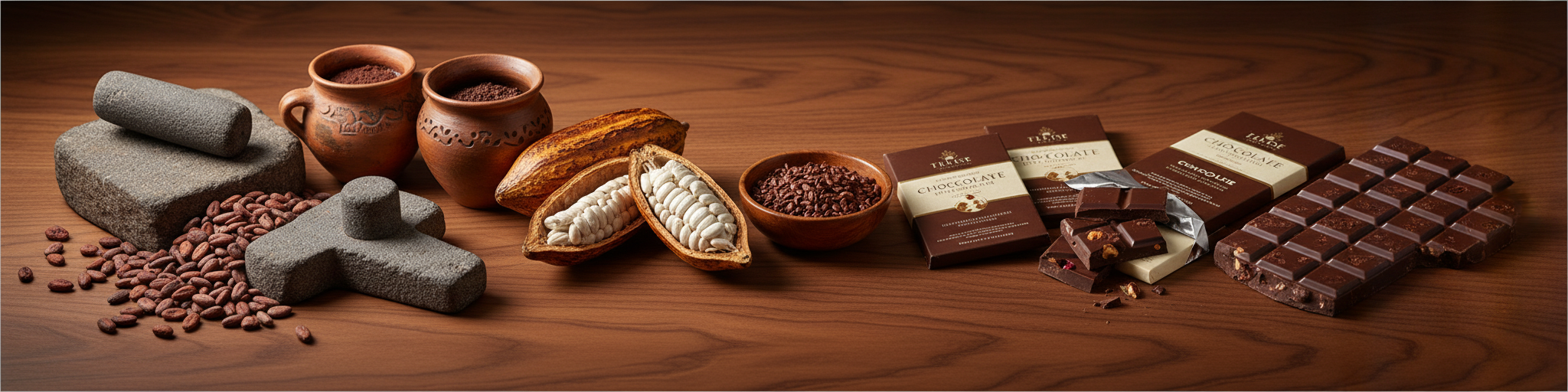
From sacred Mesoamerican ritual to Beverly Hills boutique, chocolate’s 5,000-year journey reveals how artisans have repeatedly reinvented the “food of the gods” to mirror each era’s tastes, technologies, and ethics. Readers will trace cacao’s birth as fermented currency among the Maya and Aztecs, watch Spanish conquistadors sweeten it into Europe’s luxury drink, ride the Industrial Revolution that made chocolate a mass-market bar, and witness today’s bean-to-bar renaissance where small-batch makers obsess over single-origin terroir, transparent trade, and 3-D printed wellness bonbons. Along the way, the article unpacks pivotal innovations—Van Houten’s cocoa press, the conche, milk chocolate, direct farmer partnerships—showing how each advance balanced quality, cost, and cultural meaning. By landing in present-day Los Angeles with AndSons’ Euro-Californian craft, the narrative proves that chocolate history is still being written by artisans who fuse ancient reverence for flavor with cutting-edge sustainability and personalization, giving consumers both a richer bite and a blueprint for ethical indulgence.
Origins of Chocolate and the Early History of Chocolatiers
From sacred Mayan ceremonies to Aztec marketplaces, chocolate's 5,000-year journey began as a divine gift traded as currency, with ancient artisans perfecting the art of fermenting, roasting, and grinding cacao into complex beverages that modern chocolatiers still strive to replicate.
Mesoamerican Cacao Culture and the First Chocolate Makers
Chocolate's history stretches back more than 5,000 years to when the cacao tree was first domesticated in present-day Mexico [1]. Archaeological evidence reveals even earlier domestication around 3300 BCE in Ecuador by the Mayo-Chinchipe culture, before spreading to Mesoamerica [1]. The earliest evidence of cacao drink consumption dates to 1900-900 BCE along the Pacific coast of Chiapas, Mexico, where the Mokayan people consumed cacao beverages [1]. The Olmec civilization, which flourished from approximately 1900 BCE to 300 BCE, pioneered the cultivation of cacao [2]. Though little written evidence survives, archaeological findings at San Lorenzo Tenochtitlán reveal traces of theobromine—chocolate's distinctive compound—suggesting they savored cacao during elaborate gatherings and sacred ceremonies [1]. By 600 BCE, the Maya had elevated chocolate-making into an art form that would echo through millennia.
Their sophisticated approach involved fermenting cacao beneath layers of leaves, sun-drying and roasting the beans, then meticulously grinding the nibs on heated stone metates [1]. This labor-intensive process yielded a rich paste that formed the foundation for complex beverages enhanced with vanilla, earflower, and fiery chili peppers [1]. In Mayan society, chocolate transcended mere sustenance to become a cornerstone of cultural identity. It graced official ceremonies, religious rituals, wedding feasts, and medicinal preparations [1]. The Maya revered Ek Chua as their patron god of cacao, viewing chocolate as a divine gift [1]. Their discerning palates judged quality by the darkness of foam, the hue of bubbles, the complexity of aroma, bean origin, and nuanced flavor profiles [1]—a sophisticated appreciation that modern chocolatiers continue to honor.
Cacao's value extended beyond the ceremonial cup; by 400 BCE, the beans themselves functioned as currency [1], establishing chocolate's enduring dual nature as both luxury and commodity. The Aztecs inherited and transformed these traditions, reserving chocolate almost exclusively for nobility, warriors, and the pochteca—elite long-distance traders [1]. Emperor Montezuma II's legendary consumption of 50 golden goblets daily [2] epitomized chocolate's status as the ultimate symbol of power and refinement. While the Maya typically served their chocolate warm, the Aztecs preferred it cold and often tinted with annatto's distinctive red hue [1]—preferences that would later influence European adaptations.
The Olmec, Maya, and Aztec Traditions of Cacao Processing
The ancient art of transforming cacao into chocolate began with the Olmec civilization around 1500 BCE [1]. As the earliest known chocolatiers, they established fundamental techniques that would influence centuries of chocolate making—fermenting, roasting, and grinding beans into ceremonial beverages that graced their most important gatherings [1]. The Maya revolutionized these methods by 600 BCE, developing the sophisticated processes that still inspire artisanal chocolate makers today [4]. Their meticulous approach began with fermenting cacao beneath tropical leaves, followed by careful sun-drying and roasting. Master craftsmen then spent hours grinding the precious nibs with stone manos on heated metates, creating a velvety paste that formed the base for their complex beverages [1].
These ancient chocolatiers enhanced their creations with native vanilla, delicate earflower, and bold chili peppers—flavor combinations that contemporary chocolatiers still explore [1]. Quality assessment among Maya chocolate makers rivaled modern connoisseurship. They evaluated excellence through multiple sensory dimensions: the depth of foam color, the subtle variations in bubble hue, the complexity of aroma, the terroir of bean origin, and the intricate balance of flavors [1]. To achieve their signature foam—as prized then as a perfectly tempered chocolate is today—they perfected the art of pouring liquid chocolate between vessels at precise heights [1]. The Aztecs inherited these traditions while adding their own distinctive touches.
They transformed chocolate service into elaborate court rituals, with Emperor Montezuma II's legendary consumption serving as the ultimate expression of imperial luxury [1]. Their preference for cold service contrasted with Maya customs, and they often enhanced their chocolate with annatto's vibrant red coloring [1]. These beverages remained intensely bitter—true to cacao's natural character before sugar's transformative arrival—offering a pure expression of chocolate that some modern bean-to-bar makers seek to recapture. The economic value of cacao reached such heights that counterfeit beans crafted from clay appeared in ancient markets [1], foreshadowing the quality concerns that would drive future generations of chocolatiers to establish direct relationships with cacao growers.
Spiritual and Economic Roles of Chocolate in Ancient Societies
Cacao functioned as both sacred substance and economic backbone in Mesoamerican civilizations. The Maya considered chocolate a divine gift, incorporating it into creation myths and their sacred text, the Popol Vuh [5]. In the Madrid Codex, cacao appears as the embodiment of cosmic union between the rain god Chaak and earth goddess Ixik Kaab [6]. This spiritual significance extended to everyday rituals—serving chocolate (tac haa) became ceremonial shorthand for sealing marriages [6]. The Aztecs similarly revered cacao, with their language Nahuatl naming it "yollotl eztli" (heart-blood), highlighting its connection to vital life force [6].
Archaeological evidence shows cacao residue in burial tombs, suggesting it accompanied the dead into the afterlife [5]. Beyond its sacred role, cacao beans functioned as Mesoamerica's most prestigious currency. Market transactions followed remarkably standardized exchange rates: a single bean commanded five chilies, three beans secured a turkey egg, and thirty purchased a small rabbit [6]. Luxury items reflected cacao's extraordinary value—a turkey cost 100 beans, while human slaves commanded prices reaching 1,000 beans [7]. This economic significance inevitably attracted fraud; crafty counterfeiters molded convincing fakes from wax, clay, dough, or cleverly carved avocado pits, compelling market authorities to develop authentication methods that presaged modern quality controls [6].
Cacao's dual sacred-economic nature created a sophisticated social hierarchy of chocolate consumption. Elite households transformed their wealth into elaborate chocolate ceremonies, employing rare ingredients and complex preparations that displayed both refinement and power. Meanwhile, common people stretched precious cacao with maize, creating humbler but equally cherished beverages [6]. The reach of this chocolate economy extended far beyond Mesoamerican borders—archaeological evidence has traced cacao residues to sites in present-day Utah, revealing pre-Columbian trade networks of remarkable scope [6].
Chocolate’s Journey to Europe and the Birth of Classical Chocolatiers
Spanish conquistadors stole cacao from Aztec emperors, sweetened it with cane sugar and cinnamon, and launched a hot, frothy luxury that swept European courts, survived papal fasting debates, and seeded centuries of regional chocolate traditions.
Spanish Introduction of Cacao and Early European Adaptations
Spanish conquistadors first encountered cacao when they met the Aztecs in 1519, witnessing Emperor Montezuma's consumption of the bitter beverage [1]. Hernán Cortés, recognizing its value, introduced cacao to the Spanish court where it initially served medicinal purposes before becoming a luxury drink [9]. Spain made crucial adaptations to indigenous preparation methods that fundamentally transformed chocolate for European tastes. While Mesoamericans drank chocolate cold, the Spanish served it hot, replaced chili peppers with Old World spices like cinnamon and anise, added cane sugar to counter bitterness, and invented the molinillo stirring stick to create froth instead of using the indigenous pouring method [8].
By the mid-16th century, chocolate manufacturing had expanded significantly, with Madrid storing approximately 700,000 pounds of cacao by the 1600s [1]. Chocolate spread from Spain to other European countries despite religious wars and shifting political alliances, carried by missionaries and cosmopolitan travelers [1]. The drink became particularly popular among European aristocracy who could afford this exotic luxury [1]. Its consumption sparked vigorous debates about whether it violated Catholic fasting rules, with several popes including Pius V weighing in that it did not break religious fasts [1].
Physicians across Europe studied chocolate's effects, noting its stimulating properties and debating its medical applications within humoral theory frameworks [8]. Each European region eventually developed distinctive preparation methods, flavor preferences, and specialized serving equipment, establishing regional chocolate traditions that would evolve over centuries [8].
Royal Courts and the Rise of Specialist Chocolate Artisans
Royal approval transformed chocolate from a Spanish curiosity into a prized luxury throughout Europe. By the early 1700s, royal courts had embraced this exotic import, establishing it as a symbol of wealth and refinement. In England, Charles II had his personal physician, Dr. Henry Stubbes, prepare his chocolate, who claimed one ounce provided as much nourishment as a pound of beef [10]. Queen Anne's passion for chocolate was especially notable—in May 1709, she spent £50 (equivalent to £5,000 today) on drinking chocolate alone [10].
The French aristocracy first encountered chocolate through the marriage of Anne of Austria to King Louis XIII, quickly incorporating it into their court rituals [11]. As royal enthusiasm grew, specialized chocolate makers emerged to serve these elite patrons. These early artisans refined their craft by creating elegant serving vessels and specialized processing equipment that elevated chocolate preparation to an art form. By the mid-17th century, dedicated chocolate houses opened, including London's White's Chocolate House (1693), which served as sophisticated gathering places for nobility, writers, and politicians [12]. These establishments became centers of political discourse, with author Daniel Defoe noting, "A Whig would no more go to the 'Cocoa Tree' than a Tory will be seen at coffee house in St James" [10].
The Cocoa Tree house became headquarters for the Jacobite party during Queen Anne's reign [10]. Each European region gradually developed distinctive preparation methods and flavor preferences, establishing regional chocolate traditions that evolved into formal artisanal practices [10]. The growing demand for quality chocolate accelerated innovation, with artisans developing increasingly refined techniques for transforming cacao into sophisticated confections worthy of royal tables—a legacy of craftsmanship that continues to inspire modern chocolatiers who blend European tradition with contemporary creativity.
Key Innovations: Sugar, Milk, and the First Chocolate Houses
Sugar fundamentally transformed chocolate's appeal in Europe. When Spaniards first encountered the bitter Mesoamerican beverage, as detailed in the previous subsection, they revolutionized its preparation by adding cane sugar and creating sweetened cocoa 'cakes' that could be reconstituted with water [10]. The English later pioneered mixing chocolate with milk—sometimes combining water and milk with egg yolks, sugar, and often a measure of brandy or sherry—establishing the foundation for milk chocolate that remains popular today [10].
These technical innovations coincided with social transformation as chocolate houses emerged as cultural institutions throughout Europe by the late 17th century. Unlike today's casual cafés, these establishments served sophisticated clientele in elegant surroundings [13]. Though primarily masculine domains where politics and business were discussed, women also embraced chocolate culture, albeit typically in private homes rather than public venues [10].
The combination of these three innovations—sugar's sweetness, milk's creaminess, and dedicated social spaces—transformed chocolate from an exotic curiosity into an essential part of European cultural life. This evolution from bitter ceremonial drink to sweetened social beverage laid the groundwork for centuries of chocolate innovation, establishing traditions of quality and craftsmanship that endure in contemporary artisanal chocolate making.
The Industrial Age: Mass Production and Its Effect on the History of Chocolatiers
Coenraad van Houten’s 1828 hydraulic cocoa press—by neatly separating cocoa butter from solids and “Dutching” away the bitterness—turned chocolate from a greasy elite drink into cheap bars and powders that millions of ordinary people could finally afford.
Mechanisation of Cocoa Grinding and the Cocoa Press
Until the early 19th century, chocolate remained primarily a drink of the elite, with production methods that were manual, labor-intensive, and time-consuming [16]. The pivotal moment in chocolate's industrialization came in 1828 when Dutch chemist Coenraad van Houten invented a hydraulic cocoa press that revolutionized chocolate production [14]. This machine solved a fundamental problem in chocolate consumption—cocoa beans' high fat content made hot chocolate drinks greasy and unpalatable, with cocoa butter getting "stuck in people's beards and generally causing a lot of hassle" [14]. Van Houten's press efficiently separated cocoa solids from cocoa butter, creating a defatted cocoa cake that could be pulverized into a fine powder known as 'Dutch Cocoa' [15].
This powder dissolved easily in liquids, making a smooth chocolate drink without the greasy film [14]. Beyond improving drinkability, the press created two distinct products—cocoa butter (later essential for white chocolate) and cocoa solids (the foundation of dark and milk chocolate)—that would transform confectionery [14]. Van Houten further enhanced his innovation by treating the cocoa with alkaline salts to reduce its natural bitterness, a process known as "Dutching" that improved flavor, appearance, and solubility [15]. This mechanical separation made possible "large-scale manufacture of cheap chocolate for the masses, in both powdered and solid form" [16].
The press became the cornerstone of modern chocolate manufacturing, enabling the next critical development in 1847 when Joseph Storrs Fry discovered that mixing cocoa powder and sugar with melted cocoa butter produced a paste that could be molded into solid chocolate bars [16]. Van Houten's invention fundamentally democratized chocolate consumption, transforming it from a luxury only the wealthy could afford into an everyday product accessible to ordinary people [15].
Large‑Scale Manufacturers Versus Independent Craftsmen
The industrialization of chocolate production created a stark economic divide between mass manufacturers and artisanal craftsmen by the early 20th century. A 1914 trade journal captured this reality: "The initial outlay for building and the variety of machines necessary is very large, making it impossible for any but concerns with ample capital to manufacture chocolate on a paying basis" [19]. This dynamic transformed the industry landscape—large factories prioritized efficiency and consistency, while independent artisans maintained traditional techniques to preserve distinctive flavors and textures [18].
Quality often suffered when traditional methods were abandoned for shorter production runs in modern chocolate manufacturing [18]. New York's chocolate scene from 1900-1930 illustrated this division: luxury brands like Huyler's offered handcrafted products in elegant retail stores with high-end packaging designed for "la femme du beau monde," while companies like Hawley & Hoops embraced industrial approaches for penny candies distributed through regional "jobbers" [19]. Market forces increasingly favored consolidation, with established companies absorbing smaller competitors—Walter Baker had "absorbed much of its early Boston-area competition by 1900" [19].
Despite industrial chocolate's growing dominance, consumer appreciation for craft never disappeared, as many continued to prefer "time-honored homemade chocolate with a soft and smooth texture" [18]—a preference that would eventually inspire the modern artisanal chocolate renaissance, where craft chocolate makers have "reshaped public perception by focusing on craft and quality" [17].
How Industrialisation Reshaped Chocolate Consumption
Industrialization fundamentally transformed chocolate from an elite luxury to an everyday mass-market product. The dramatic shift began with technological innovations that enabled large-scale production—Van Houten's 1828 cocoa press separated cocoa butter from cocoa solids, allowing manufacturers to create stable, affordable chocolate products [14]. Before industrialization, Americans consumed merely 2 pounds of sugar annually, but by the early 21st century, this figure skyrocketed to 152 pounds per person per year [21]. This exponential growth coincided precisely with the Industrial Revolution, which served as the inflection point for chocolate consumption [21]. The workplace revolution created new consumption patterns as workers adapted to factory schedules. With limited meal preparation time, laborers increasingly sought convenient, energy-dense foods [20].
As nations became "more urban and industrialized," they changed "eating schedules to meet work schedules, teaching laborers to eat away from home, to eat prepared food more frequently, and to consume more sugar along the way" [21]. The invention of the chocolate bar in 1847 by Joseph Fry perfectly addressed this new reality—providing portable, immediate energy for the industrial workforce [14]. Gender roles further transformed consumption as more women entered factories, shifting from traditional home cooking to convenient prepared foods, with chocolate becoming an essential ingredient in quick-preparation treats like cake mixes and brownies [21]. The democratization of chocolate accelerated as mechanization dramatically reduced costs. What was once "an elite, expensive product primarily consumed as a beverage" transformed into "an inexpensive cocoa powder to be drunk or low-cacao-content chocolate bar to be consumed as a food by elite and non-elite alike" [21]. Mass-market manufacturers further manipulated consumption through scientific approaches like the "bliss point"—a perfect combination of salt, fat, sugar and diverse textures that overrides our natural satiety signals, making it difficult to stop eating chocolate products [14].
This science-based approach to formulation exemplifies how industrialization changed not just how much chocolate people consumed, but fundamentally altered the relationship between consumers and chocolate itself. While the industrial processes introduced in the 19th century continue to shape mainstream chocolate consumption today, a counter-movement has emerged. Contemporary artisanal chocolatiers have reclaimed many pre-industrial techniques, focusing on quality over quantity and authentic flavor development over engineered "bliss points. " This return to craft represents not nostalgia but a sophisticated evolution—modern artisans combine time-honored techniques with contemporary understanding of cacao's complexity, creating chocolates that honor both tradition and innovation [21].
The Revival: Bean‑To‑Bar and the Modern Artisanal Chocolatier Movement
From a dying cancer patient’s two-week French apprenticeship to 481 global artisans stamping cacao percentages like wine vintages, the bean-to-bar revolution reclaimed chocolate as an agricultural craft—starting in a kitchen with a mortar and hair dryer.
Origins of the Bean‑To‑Bar Philosophy
The bean-to-bar movement represents a fundamental shift in chocolate production philosophy—makers control the entire process from sourcing raw cacao to crafting finished chocolate. Though the movement gained prominence in the 1990s, its roots trace to France's Bernachon chocolate shop, which began transforming cacao beans directly in 1953 [22]. The American bean-to-bar revolution started when physician Robert Steinberg, following a cancer diagnosis, apprenticed at Bernachon for two weeks in 1993 [23]. This brief internship inspired Steinberg to partner with winemaker John Scharffenberger to launch Scharffen Berger in 1996—the first American company in over 50 years to make chocolate from bean to bar [23].
Their experimental process began humbly in Steinberg's kitchen using basic tools: mortar, pestle, coffee grinder, and a hair dryer to keep chocolate viscous [23]. By 1997, they scaled to a South San Francisco factory using vintage German equipment and beans selected directly from growers [23]. Scharffen Berger pioneered listing cacao percentages on labels, fundamentally changing how consumers understood chocolate quality [23]. The movement gained significant momentum in the 2010s, expanding globally with 481 bean-to-bar makers documented by 2017 [24].
These artisans differentiated themselves through direct sourcing relationships with farmers, emphasis on flavor complexity, small-batch production, and ethical trading practices [24]. Packaging evolved to resemble wine labels—featuring origin information, processing details, and tasting notes that educated consumers about chocolate's terroir and craft [24]. This artisanal approach directly challenged industrial chocolate's dominance and reconnected consumers with chocolate's agricultural roots.
Craft Techniques: Conching, Tempering, and Single‑Origin Sourcing
Conching represents a pivotal innovation in chocolate's evolution from bitter beverage to modern confection. This process involves mixing, aerating, and kneading liquid chocolate over extended periods—typically 24 to 72 hours—to homogenize texture while allowing volatile acids to evaporate [25]. This extended refinement mellows acidity, eliminates unwanted aromatic compounds, and creates the velvety mouthfeel characteristic of quality chocolate [27]. While industrial manufacturers often rush conching at high temperatures to maximize production, artisanal makers use patience as their primary ingredient, allowing flavors to breathe and settle [27]. Time transforms chocolate from rough to refined—shorter conching preserves bright, fruity notes while longer periods develop deeper richness [25].
Tempering follows as the crucial technique that gives chocolate its glossy finish, satisfying snap, and smooth texture [25]. This precise process involves carefully melting and cooling chocolate along specific temperature curves to achieve optimal crystallization of cocoa butter [27]. Without proper tempering, chocolate appears dull, feels grainy, and lacks professional quality [25]. Artisans often use specialized tempering machines to maintain exact temperature control, ensuring consistent results across production batches [27]. Single-origin sourcing has revolutionized modern chocolate craft by focusing on terroir—the environmental factors that shape cacao's flavor profile [25].
Much like wine, chocolate made from beans grown in specific regions exhibits distinctive taste characteristics [27]. Beans from Ecuador produce entirely different flavor notes than those from Madagascar or Venezuela, with each origin offering unique fruity, floral, nutty, or earthy profiles [25]. This specificity challenges consumers to look beyond simple country-of-origin labels, as cultivation practices, climate, plot orientation, altitude, and rainfall all influence final flavor [27]. For craft chocolatiers, single-origin sourcing provides both challenge and opportunity—each harvest's subtle variations require adaptation while offering unique taste experiences that showcase chocolate's remarkable complexity [27].
Notable Contemporary Chocolatiers Shaping the New Era
Today's most innovative chocolatiers span the globe, redefining chocolate through direct relationships with producers and meticulous craftsmanship. While pioneers like Scharffen Berger blazed the trail in the 1990s, a diverse new generation has emerged across six continents. In Thailand, Jittranuch "Boo" Bhumirat of Boo Chocolate cultivates her own cacao trees while offering educational workshops that connect consumers directly with chocolate's agricultural roots [28]. Seneca Klassen's Lonohana Estate in Hawaii creates true tree-to-bar chocolate from cacao grown on O'ahu's north shore, offering seasonal bars that showcase the evolving flavor profiles of their developing orchard [28].
Vertical integration distinguishes makers like Cacaoteca, founded by Coral de Camps in the Dominican Republic, who produces chocolate just 175 kilometers from her plantations to ensure exceptional freshness [28]. The movement embraces significant diversity, with women and BIPOC entrepreneurs reshaping an industry historically dominated by European traditions. Chocolatiers like Damaris Ronkanen (Cultura), Hallot Parson and Danielle Centeno (Escazu), and the Reids (SPAGnVOLA) bring cultural perspectives that expand chocolate's flavor vocabulary through indigenous ingredients and techniques [29]. These artisans prioritize both quality and ethical relationships, often paying well above market prices for beans and establishing direct trade relationships [30].
By controlling the entire process from bean selection through production, they create distinctive flavor profiles impossible in mass production—fruity notes from Madagascar beans contrast dramatically with the nutty character of Venezuelan cacao [30]. This craftsmanship has attracted leading chefs and even industry giants who recognize bean-to-bar as the new standard for quality and transparency, transforming chocolate from commodity into an expression of terroir comparable to fine wine [30]. Modern chocolatiers continue to build upon these foundations, creating distinctive collections that honor traditional craft while embracing contemporary innovation.
Contemporary Practices: Sustainability, Technology, and Innovation in Chocolatiering
Forward-thinking chocolatiers are transforming chocolate from a commodity into an ethical luxury by publishing transparent reports that prove they pay farmers up to four times market rates, pre-finance harvests, and eliminate middlemen—turning every bar into verifiable proof of supply-chain justice you can taste.
Direct‑Trade Sourcing and Ethical Cocoa Initiatives
The chocolate industry has evolved beyond mass production toward ethical sourcing models that address longstanding inequities in the cacao supply chain. Direct trade sourcing emerged as an alternative to traditional certification systems, emphasizing relationships between chocolate makers and cacao farmers rather than bureaucratic oversight [31]. While Fair Trade certification establishes minimum standards for farmer compensation and working conditions through cooperatives, direct trade focuses on quality-based pricing that typically rewards farmers with payments 2-4 times above commodity rates [33]. As one industry pioneer explains, "Direct Trade typically includes higher quality de-commodified products with more money going directly to the farmer" [33].
This approach creates tangible benefits beyond certification fees—forward-thinking chocolatiers sometimes pre-pay farmers facing cash flow challenges and invest in local infrastructure projects like bridge restoration [33]. Beyond pricing, direct trade involves regular visits to farms, collaborative quality improvement, and elimination of middlemen [31]. The movement has also spawned "transparent trade" practices where companies publish comprehensive sourcing data. Leading practitioners produce Annual Transparency Reports disclosing "all prices and margins across its value chain" with "real numbers, real names, and real stories of the human beings who grow, produce, and move the cacao" [33].
Similarly, some chocolatiers publish reports comparing their payments against World Market and Fair Trade pricing, demonstrating they pay approximately 25% more than Fair Trade minimums [33]. These transparency initiatives give consumers unprecedented visibility into chocolate's journey from bean to bar while creating accountability that commodity chocolate typically lacks [32]. Modern artisans like AndSons exemplify this commitment through partnerships with sustainable suppliers who maintain direct farmer relationships and environmental stewardship.
Digital Tools: Flavor Profiling, 3‑D Printing, and Traceability
Technology has fundamentally transformed how chocolatiers create, customize, and track their creations. Digital flavor profiling uses artificial intelligence to develop unique flavor combinations, allowing artisanal makers to craft distinctive taste experiences that stand out in a competitive market [17]. The most visible technological revolution has come through 3D printing, which has enabled unprecedented sculptural possibilities.
Industry leaders have launched the world's first personalized 3D chocolate printing services, allowing chefs to create intricate designs that would be impossible through conventional techniques [34]. Renowned pastry chefs have developed innovations like 'Flor de Cacao'—a cocoa bean sculpture that opens like a flower when touched by hot chocolate sauce [34]. European innovators demonstrate how 3D printing bridges traditional craftsmanship with modern technology, creating everything from chocolate beer bottles to custom wedding favors using modified printers [35].
The technology's precision allows for mass customization while maintaining a handmade appearance, printing thousands of identical pieces that each appear individually crafted [34]. Beyond aesthetics, digital tools have enhanced traceability throughout the supply chain, allowing consumers to track chocolate from bean to bar through IoT sensors and blockchain technology [17]. This transparency has become increasingly important as consumers demand ethical sourcing information, with many artisanal makers publishing comprehensive data about their cocoa sourcing, pricing, and processing methods [17].
Future Trends: Functional Chocolate and Experiential Retail
Chocolate's future lies at the intersection of wellness, technology, and immersive experiences. Functional chocolate—infused with adaptogens (ashwagandha, maca), superfoods (spirulina, turmeric), and mood boosters (magnesium, probiotics)—represents a significant shift toward purposeful indulgence [36]. This trend responds to consumer demands for products that do more than satisfy cravings; nearly 75% of North American consumers believe chocolate should align with their health needs [37]. Beyond ingredients, retail experiences are evolving into multi-sensory journeys.
Chocolate pairing experiences with wine, coffee, and spirits are resurging as consumers seek experiences rather than mere products [38]. Technology enables unprecedented personalization through 3D printing and AI-driven flavor development, allowing brands to create customized products reflecting individual preferences [38]. Direct-to-consumer models are transforming how chocolatiers connect with audiences, creating content-rich relationships that extend beyond transactions [38]. The most forward-looking brands now position chocolate as an emotional wellness tool—addressing stress, focus, and mood through targeted formulations that make indulgence part of daily self-care routines [38].
This convergence of functional benefits and experiential consumption points to a chocolate future where wellness and pleasure are no longer separate considerations. As contemporary chocolatiers continue to innovate, the industry moves toward a more sustainable, transparent, and experientially rich future—one where traditional craftsmanship meets cutting-edge technology to create chocolate that nourishes both body and soul.
The Andsons Legacy: A Case Study of Modern American Artisanship
AndSons Chocolatier transformed a 35-year Swiss chocolate legacy into a distinctly Californian artisan enterprise by replacing imported confections with locally-sourced ingredients, sustainable French B Corp partnerships, and award-winning Los Angeles-inspired design.
Family Heritage and the Evolution from a Swiss Boutique to a Beverly Hills Brand
AndSons Chocolatier represents a distinctive evolution from European tradition to California innovation. The story began in 1983 when Aviva Covitz introduced Beverly Hills to exotic European chocolates through her Swiss chocolate boutique teuscher, which became a chic local gathering spot [39]. For 35 years, she cultivated loyal customers who developed personal connections with the family—many still return annually for holiday gifts [39]. When brothers Mark and Phil Covitz inherited the business in 2018, they embarked on a significant transformation, ending the historic Swiss partnership to create something uniquely Californian [39].
They rebranded as andSons in 2019, shifting from imported confections to in-house production at a downtown arts district facility [40]. This transition reflects a deliberate bridge between European heritage and Los Angeles creativity [40]. The brothers now work with French B Corp Valrhona, chosen specifically for its sustainability commitments and direct relationships with farmers [39]. While maintaining their mother's dedication to quality, they've repositioned their offerings with locally-sourced ingredients from organic Ventura County farms and the Santa Monica Farmer's Market [39].
The physical space underwent similar transformation—designer Nate Berkus created bold, colorful interiors featuring gold shelving and a ceiling mural of a cocoa tree by local Topanga artist Maggie Washinburg, who incorporated actual cocoa into the paint [40]. This attention to detail extends to their packaging, which recently won The Dieline's prestigious design award [40]. Phil Covitz's three sons' names were subtly carved into the painted ceiling tree, suggesting hopes for a third generation to continue the family's sweet legacy in Beverly Hills [40].
Signature Collections That Blend Tradition with Los Angeles Creativity
AndSons' signature collections blend European chocolate-making traditions with distinct Los Angeles influences. Their core collection features ganaches, pralines, and caramels made using locally-sourced ingredients from Ventura County farms and the Santa Monica Farmer's Market [41]. This localization transforms classic confections through California's agricultural bounty.
Their seasonal "Peace + Palm Trees" boxes have become a Beverly Hills holiday tradition, featuring LA-inspired designs by Nate Berkus that visually reference the city's iconic landscape [41]. Beyond aesthetics, AndSons extends their community connection through collaborations with LA-based artists like muralist Bumblebeelovesyou, with proceeds supporting local schools [41]. Their technical approach prioritizes premium ingredients—using milk chocolate with up to 56% cocoa content, significantly higher than industry standards—which creates more complex flavor profiles while reducing sugar content [42].
This balance of European chocolate-making techniques with California sensibilities reflects their evolution from Swiss imports to locally-crafted creations. After parting ways with teuscher, AndSons began crafting chocolates in-house, developing distinctive offerings like their Dark Chocolate Orange Peels that combine classic techniques with vibrant citrus notes characteristic of Southern California [43].
How Andsons Exemplifies the Current History of Chocolatiers
AndSons exemplifies the evolution of modern chocolatiering through its deliberate balance of tradition and innovation. Located just off Rodeo Drive in Beverly Hills, this second-generation family business bridges European chocolate-making heritage with California's creative spirit [46]. The company transformed from a traditional Swiss chocolate boutique established in 1983 to a modern brand with nationwide delivery capabilities [44].
Their commitment to in-house craftsmanship—creating every product on-site rather than outsourcing—reflects the artisanal movement's emphasis on quality control and transparency [46]. The 2019 store redesign by Nate Berkus, featuring a ceiling mural of a cacao tree painted by Los Angeles artist Maggie Lochtenberg, demonstrates how contemporary chocolatiers create immersive retail experiences that educate customers about chocolate's origins [45]. AndSons' sustainable sourcing practices align with industry shifts toward ethical production, while their integration of California-inspired ingredients like local citrus and almonds shows how modern chocolatiers connect global traditions with regional terroir [46].
Their recognition from publications including The New York Times, Oprah, Bon Appétit, The Michelin Guide, and Food & Wine confirms their position as influential practitioners in chocolate's ongoing evolution [46]. The shop's operation as a European-style café—serving Counter Culture Coffee and Rishi Tea alongside chocolates—exemplifies how today's chocolatiers expand beyond confections to create comprehensive sensory experiences [45]. Through these practices, AndSons represents the culmination of chocolate's journey from ancient ritual substance to contemporary artisanal craft.
- Cacao beans were used as currency in Mesoamerica; 100 beans bought a turkey, 1,000 a slave.
- Van Houten’s 1828 hydraulic press separated cocoa butter, enabling cheap mass-market chocolate bars.
- Bean-to-bar makers pay farmers 2–4× commodity prices via direct trade, cutting out middlemen.
- 3D printing and AI flavor profiling let artisans create bespoke, sculptural chocolate designs.
- AndSons swapped Swiss imports for house-made chocolates using 56% cocoa milk chocolate and LA produce.
- https://en.wikipedia.org/wiki/History_of_chocolate
- https://thechocolatewebsite.com/thehistoryofchocolate/
- https://www.smithsonianmag.com/history/archaeology-chocolate-180954243/
- https://www.nationalgeographic.com/travel/article/anitgua-maya-chocolate-making
- https://www.magellantv.com/articles/the-history-and-significance-of-chocolate-in-mayan-culture
- https://www.ie.edu/insights/articles/cervantes-and-cacao-a-bittersweet-legacy/
- https://plusfudge.com/2025/01/25/chocolate-through-the-ages-the-mayan-and-aztec-connection/
- https://dcc.newberry.org/?p=14389
- https://sahichocolate.com/the-history-of-chocolate/
- https://www.english-heritage.org.uk/easter/the-history-of-chocolate/
- https://candiesandsweets.com/european-chocolate-history-from-aztec-luxury-to-global-delight/
- https://www.getours.com/expert-travel-advice/food-drink/a-brief-world-history-of-chocolate
- https://www.thechocolateprofessor.com/blog/return-of-chocolate-house-cafes
- https://cocoarunners.com/chocopedia/an-industrial-history-of-chocolate/
- https://cocoanusa.com/articles/van-houten-chocolate-origin/
- https://chocolateclass.wordpress.com/2015/03/12/industrial-revolution-chocolate-revolution/
- https://techbuzzireland.com/2024/01/31/the-evolution-of-chocolate-innovations-in-artisanal-production/
- https://aithor.com/essay-examples/the-impact-of-industrialization-on-traditional-chocolate-factory-operations-and-quality
- https://thechocolatelife.com/birth-of-an-industry-chocolate-in-new-york-city-1900-1930/
- https://www.historians.org/perspectives-article/a-taste-of-the-past/
- https://chocolateclass.wordpress.com/2020/03/24/more-chocolate-more-quickly-changes-in-chocolate-consumption-brought-about-by-the-industrial-revolution/
- https://www.tastefrance.com/us/magazine/french-pantry/bean-bar-chocolate-french-american-story
- https://en.wikipedia.org/wiki/Scharffen_Berger_Chocolate_Maker
- https://toakchocolate.com/blogs/news/the-fascinating-history-of-chocolate
- https://amanochocolate.com/from-bean-to-bar-the-journey-of-crafting-artisan-chocolate/
- https://pumpstreetchocolate.com/blogs/news/how-we-make-our-bean-to-bar-chocolate?srsltid=AfmBOoq4BSm1K9eYW3q8Zy0_i6c8pkJGX9HIQRHXASHnixtkENaSusfz
- https://cacaoinsights.com/cacao/bean-to-bar-making-process/
- https://www.thechocolateprofessor.com/blog/10-great-tree-to-bar-chocolate-makers
- https://www.chocolatenoise.com/chocolate-today/my-top-50-bean-to-bar-chocolate-makers-in-the-united-states
- https://mae-innovation.com/en/the-importance-of-bean-to-bar-chocolate-why-are-chefs-and-industry-leaders-interested/
- https://chocolateaffairsmagazine.com/fair-trade-vs-direct-trade-chocolate/
- https://www.forward2me.com/blog/sustainable-chocolate/
- https://www.thechocolateprofessor.com/blog/how-to-better-understand-fair-trade-direct-trade-amp-transparent-trade
- https://www.barry-callebaut.com/en/about-us/media/news-stories/barry-callebaut-opens-worlds-first-3d-printing-studio-craft-unseen
- https://felixprinters.com/3d-printing-chocolate-a-very-tasty-technology/
- https://caljavaonline.com/blogs/news/the-future-is-sweet-top-chocolate-trends-every-chocolate-maker-should-know-going-into-2026?srsltid=AfmBOooFBlwbPBJsMGh0XJ3iswirnmdWSiAHzfd6-KJSU2ppY2Iq8LLc
- https://www.barry-callebaut.com/en-US/trends-insights/top-chocolate-trends
- https://www.gourmetpro.co/blog/top-global-chocolate-trends
- https://observer.com/2023/06/the-beloved-chocolatier-of-beverly-hills/
- https://beverlyhillscourier.com/2019/10/25/andsons-chocolatier-kicks-off-the-holiday-sweets-season-in-beverly-hills/
- https://and-sons.com/collections/chocolate-boxes?srsltid=AfmBOoqwZLjfMLMWK3HWJ3dQSSwV67UoHvSQFlNyeQYIyDxGpJVdXyRu
- https://and-sons.com/blogs/journal/milk-chocolate-boxes-creamy-delights-for-every-occasion?srsltid=AfmBOopk0QdOYnm58s0-tFtn5SSDbP58AhUvOkJUCnQFDPSnMNvBKRwR
- https://www.yelp.com/biz/andsons-chocolates-beverly-hills
- https://and-sons.com/?srsltid=AfmBOoqUQIR97uVXdDdUFq8oYeYnzZoKeUkWYbk1fD6hFVKTEctNBcQQ
- https://and-sons.com/pages/visit-us?srsltid=AfmBOoosvlAkjJtDB2jOuOUU0nPMmB3RIFdkOHW57UnqioyB_nYwYVx9
- https://and-sons.com/blogs/journal/exploring-the-sweet-side-of-beverly-hills-the-best-chocolate-experience-awaits-at-andsons-chocolatiers?srsltid=AfmBOopvcB2bzfZDPouDAML9s9YXrEvHcoHG04jpS8KtsjyYY0HO48_X