


Heart-Shaped Chocolate Boxes for Valentine’s Day: A Classic Gift
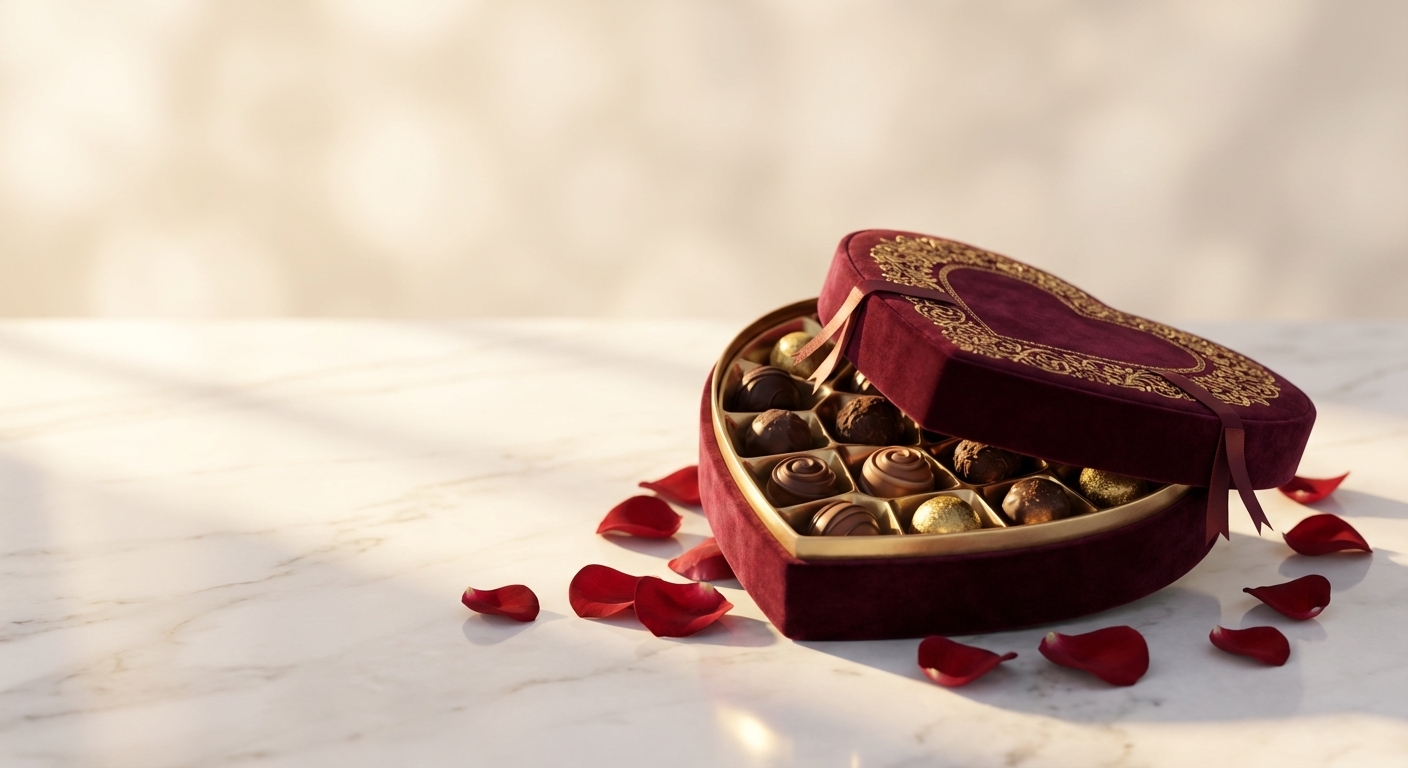
Heart-shaped chocolate boxes, born from Richard Cadbury’s 1868 Victorian marketing stroke of genius, still rule Valentine’s Day because their silhouette instantly signals love and invites a memorable, multi-sensory unboxing ritual that digital greetings can’t replicate. The article traces how surplus cocoa butter, changing wartime tastes, and social-media shareability transformed the boxes into a 58-million-pound American tradition, then teaches readers to spot artisan quality—look for glossy hand-tempered bonbons filled with single-origin ganaches, protected by rigid eco-friendly packaging, and shipped climate-controlled—so the gift tastes as exceptional as it looks. It explains why fair-trade sourcing, creative flavor pairings like bergamot or Tahitian vanilla, and structural details such as double-tiered compartments justify premium prices of about $15–16 per pound and elevate the gesture from mere candy to keepsake. Finally, it offers practical storage science: keep the box at 65–68 °F in an airtight container, skip the fridge to avoid odor absorption and sugar bloom, and bring truffles to room temperature before serving so their flavors fully bloom, ensuring the romantic moment lingers long after the last bite.
The Timeless Appeal of Heart-Shaped Chocolate Boxes
Born from a Victorian-era marketing solution for excess cocoa butter, the heart-shaped chocolate box has endured for 150 years as a powerful visual shorthand for love, transforming ordinary confections into vessels of deep affection that Americans now purchase by the millions each February.
Historical Roots and Modern Romance
The heart-shaped chocolate box tradition began in Victorian England when Richard Cadbury created the first Valentine's Day box in 1868 [1]. Though Valentine's Day had been associated with romance since Geoffrey Chaucer's 1382 writings [2], it wasn't until the 1840s that the English-speaking world embraced it as a celebration of romantic love [3]. Cadbury, facing excess cocoa butter from his company's improved chocolate-making process, transformed this surplus into "eating chocolates" [1]. Recognizing a marketing opportunity amid the Victorian fascination with romance, he packaged these confections in elaborately decorated heart-shaped boxes featuring cupids, roses, and romantic imagery [3].
These ornate boxes served a practical purpose beyond holding chocolates. Once emptied, Victorians repurposed them to store love letters, locks of hair, and other sentimental mementos [1]. Despite their commercial success, Cadbury never patented his heart-shaped design, allowing American chocolatiers to adopt and spread the tradition. The contents evolved alongside cultural tastes—early boxes featured chocolate ganache, marzipan and fruity creams, while later additions included caramels (as sugar prices dropped), cherry cordials, and coconut fillings after American inventors developed coconut shredding machines in 1876 [2].
After World War I, returning American soldiers drove demand for milk chocolate, further cementing the tradition's place in Valentine celebrations [2]. Today, Americans purchase approximately 58 million pounds of chocolate leading up to February 14th [3], continuing a romantic tradition born from a Victorian marketing innovation.
Why Luxury Givers Choose the Classic Shape
Luxury gift-givers choose heart-shaped chocolate boxes for their powerful emotional symbolism. The distinctive shape instantly communicates love without words, making it uniquely effective in expressing deep affection [4]. This visual shorthand transforms ordinary chocolates into meaningful tokens of romance.
Beyond symbolism, these boxes create multisensory experiences through ritualistic unboxing that transforms gift-giving into ceremony [4]. The distinctive shape facilitates emotional connection—not just between romantic partners but among all who share warmth and care through thoughtful gifting [4]. In today's digital culture, the heart shape proves particularly effective on social media, where beautiful packaging extends the gift's impact beyond the recipient to wider social circles [4].
By satisfying recipients visually, tactilely, and gustatorily, the heart-shaped box creates lasting memories that standard packaging cannot match—a principle that guides the design choices discussed in the following section [4]. This emotional resonance explains why heart-shaped boxes remain central to Valentine's gift-giving despite changing cultural tastes in chocolate fillings over decades.
Choosing the Ideal Heart-Shaped Chocolate Box for Valentine’s
Look for hand-crafted bonbons with clean temper marks, single-origin cacao paired with Tahitian vanilla, and double-layered sustainable boxes—those details separate an artisan Valentine’s heart from factory chocolates.
How to Pick a heart-shaped chocolate box valentine’s that Impresses
Building on the emotional significance discussed earlier, selecting an exceptional heart-shaped chocolate box requires understanding what distinguishes artisan quality from mass production. As second-generation chocolatiers have learned, the difference lies in craftsmanship details that may escape casual observation. Begin by examining the chocolate maker's technique—hand-crafted bonbons with precise temper marks, clean edges, and consistent sheen indicate proper handling and storage [5].
Decorative elements like hand-piped designs or delicate gold leaf application reveal the time investment that separates artisan work from factory production [5]. Flavor sophistication serves as another quality marker. While basic assortments rely on familiar profiles, premium collections venture into complex territory—think single-origin Ecuadorian cacao paired with Tahitian vanilla, or ganaches infused with rare botanicals like violet or bergamot [5]. Limited-edition Valentine's collections often showcase a chocolatier's creativity through exclusive seasonal combinations unavailable during other times of year [5].
The box construction itself merits attention; luxury chocolatiers invest in substantial packaging that protects delicate confections while creating an elevated unboxing experience. Some makers now source sustainable materials like handcrafted paperboard, adding ethical dimension to aesthetic appeal [5].
Key Features to Evaluate for Premium Quality
When evaluating heart-shaped chocolate boxes, structural integrity reveals quality before the first bite. Double-layered or multi-tier designs with rotating compartments elevate presentation while protecting individual pieces from damage [6]. Premium boxes employ rigid construction with proper cushioning—essential for maintaining the delicate temper and preventing bloom during transport. Inside, variety demonstrates a chocolatier's range; exceptional assortments balance dark and milk chocolates with diverse centers including classic ganaches, fruit-forward combinations, and nut-based pralines.
Price typically reflects quality, with premium artisan chocolates commanding $15-16 per pound due to superior cacao sourcing and hand-crafting time [7]. Size creates impact—larger presentations make memorable statements, though smaller curated selections can showcase refinement [7]. European chocolate-making traditions, particularly those from Belgium, Switzerland, and Italy, often indicate mastery of classic techniques, while American artisan chocolatiers increasingly rival these standards through innovation and local ingredient sourcing [7]. Ethical considerations have become inseparable from luxury.
Discerning buyers seek fair trade certification, single-origin cacao traceability, and transparency about sourcing practices. Premium chocolatiers avoid preservatives, artificial flavors, and unnecessary additives—the best chocolates contain only cacao, sugar, vanilla, and carefully selected inclusions. Climate-controlled shipping with temperature monitoring ensures chocolates arrive in pristine condition, preserving both appearance and flavor integrity.
Enhancing the Gift Experience
Keep your Valentine's chocolates at 65-68°F in airtight containers—not the fridge—to preserve their flavor, prevent whitish sugar bloom, and ensure that first bite melts perfectly on the tongue.
Care and Storage Tips to Preserve Freshness
Proper storage preserves both flavor and appearance of Valentine's chocolates. Store boxes in a cool, dry place at 65-68°F (15-18°C) with humidity below 55% to maintain the stable emulsion of cocoa solids and butter [9]. Avoid refrigeration as chocolate readily absorbs refrigerator odors and moisture can cause sugar bloom—a whitish discoloration that forms when sugar rises to the surface [9].
Keep boxes away from direct sunlight and heat sources, which can deform chocolates and alter their delicate flavors [10]. For optimal preservation, store in airtight containers that protect against external odors and humidity fluctuations [10]. During summer heat waves when air conditioning isn't available, wrap chocolates tightly before refrigerating to protect against condensation and odor absorption, then allow them to return to room temperature before unwrapping [9].
For extended storage of six months to a year, freezing is possible—first refrigerate wrapped chocolates for 24 hours, then transfer to the freezer, reversing these steps when ready to consume [9]. Always eat chocolates at room temperature, especially truffles, to experience their full flavor profile and proper melt-in-mouth texture [9]. Properly stored chocolates from quality makers will remain fresh for several weeks, though they're best enjoyed within days of purchase for the optimal sensory experience [10].
- Heart-shaped chocolate boxes debuted in 1868 as a Victorian marketing strategy by Richard Cadbury.
- Premium boxes signal quality through hand-crafted bonbons, single-origin cacao, and sustainable packaging.
- Americans buy ~58 million pounds of chocolate for Valentine's, keeping the heart-box tradition alive.
- Store chocolates at 65-68°F, below 55% humidity, and never refrigerate to prevent bloom and odor absorption.
- The heart shape instantly communicates love and boosts social-media visibility, extending the gift's impact.
- https://www.history.com/articles/valentines-day-chocolate-box-history-cadbury
- https://food52.com/story/27773-valentines-chocolate-box-history
- https://10best.usatoday.com/food-drink/valentines-day-heart-shaped-chocolate-box-story-tradition-originated/
- https://www.jialanpackage.com/why-are-heart-shaped-chocolate-boxes-so-popular-on-valentine-s-day
- https://www.forbes.com/sites/chelseadavis/2021/02/04/valentines-day-gift-guide-the-most-artistic-chocolate-gift-boxes/
- https://www.amazon.com/Packing-Rotating-Graduation-Christmas-Birthday/dp/B09Q8DVF6W
- https://www.yahoo.com/lifestyle/articles/huge-seasonal-sweet-winning-hearts-121700670.html
- https://and-sons.com/
- https://www.thekitchn.com/the-best-way-to-store-chocolate-198106
- https://www.finecooking.com/article/storing-chocolate