


FAQ: Where to Buy Gourmet Truffles
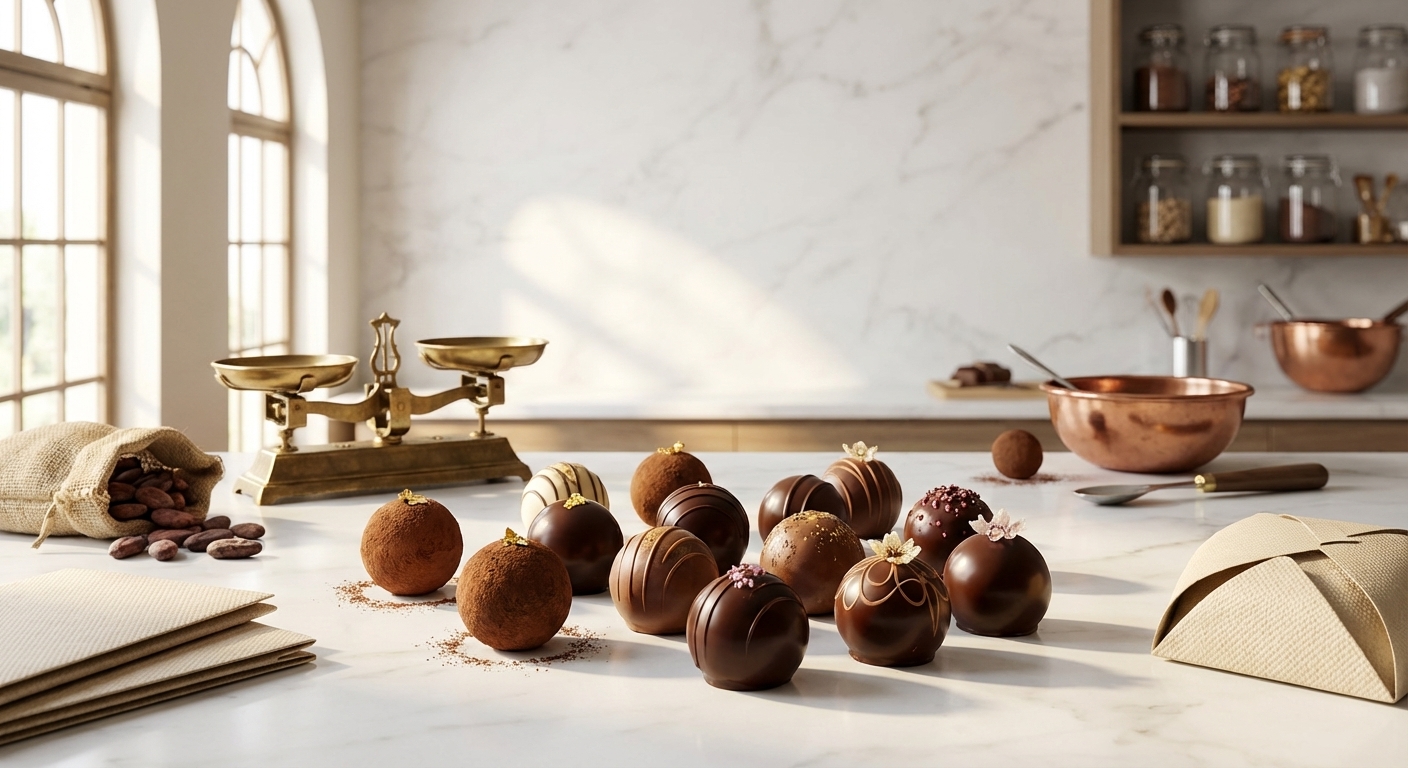
This comprehensive guide empowers chocolate lovers to navigate the gourmet truffle market like seasoned connoisseurs by revealing where to find authentic artisanal chocolatiers who blend European techniques with local influences, how to identify premium quality through cocoa content, glossy appearance, clean snap, and complex flavor development, and why certification labels like Fairtrade International matter for ethical sourcing. Readers will master the art of evaluating truffles by understanding ingredient lists that prioritize real chocolate with cocoa butter over vegetable oil substitutes, recognizing the significance of single-origin beans from regions like Venezuela or Ecuador, and appreciating how proper storage extends shelf life up to three months when refrigerated. The article demystifies seasonal purchasing patterns, showing how Valentine's Day and winter holidays drive peak sales with limited-edition collections, while spring brings citrus and floral notes, summer features tropical fruits, and autumn returns to spiced caramel and maple flavors. By comparing value propositions—premium truffles at $2-5 per piece versus mass-produced options at $0.50-1.50—readers learn to calculate cost per piece rather than box price, take advantage of post-holiday sales, join loyalty programs for exclusive discounts, and purchase directly from chocolatiers for fresher products and better prices. Whether seeking the perfect gift or personal indulgence, this guide transforms casual buyers into informed consumers who can confidently select truffles that deliver exceptional quality, ethical sourcing, and optimal value throughout the year.
Where to Buy Gourmet Truffles: Finding Options Near You
Seek out nearby artisanal chocolatiers who hand-craft small-batch truffles from single-origin chocolate, fusing classic European methods with local flavors for a taste mass-produced sweets can’t rival.
Local Specialty Shops and Artisanal Chocolatiers
Artisanal chocolatiers craft truffles with distinctive flavors that mass-produced options can't match.
These specialty shops often feature handmade small-batch production, using single-origin chocolates and premium ingredients that showcase their craft.
How to Evaluate Quality of Gourmet Truffles
Spot gourmet truffles worth buying by scanning the label for real chocolate and cream, a glossy bloom-free shell, cacao in the 60-85 % range, and Fairtrade arrows that verify ethical sourcing.
Key Indicators of Premium Ingredients
Quality truffles reveal their premium ingredients through visible and sensory characteristics. Examine the ingredients list first—top-tier truffles use real chocolate with cocoa butter rather than vegetable oil substitutes, fresh cream instead of powdered, and natural flavorings over artificial additives. The chocolate's cacao percentage indicates complexity; 60-70% offers balanced flavor, while 70-85% provides deeper, more intense profiles.
At andSons Chocolatiers, we apply time-honored European techniques to ensure each truffle exhibits the hallmarks of quality: a glossy sheen without white blooming (a sign of temperature fluctuation) and a clean snap when broken rather than crumbling or feeling waxy. The aroma should present complex notes rather than overwhelmingly sweet scents that often mask lower-quality bases.
Premium truffles balance multiple flavor dimensions that develop as they melt—beginning with initial sweetness, progressing through rich chocolate notes, and finishing with a clean, lingering flavor.
Decoding Certifications and Origin Labels
Certification labels on truffle packaging reveal both quality standards and ethical sourcing practices. Understanding these marks helps you make informed choices about the chocolate's origin and production methods. Fair Trade certifications indicate that cocoa farmers received fair compensation and working conditions. The most common certification, Fairtrade International (marked by the blue and green circular logo), guarantees full traceability from farm to shelf [4].
When you see this mark with an arrow, check the back of the package for detailed sourcing information, as it indicates a product with multiple ingredients where all available Fairtrade components (like cocoa, sugar, and vanilla) were sourced ethically [4]. The white Fairtrade Sourced Ingredient mark specifies that only certain ingredients (typically cocoa in truffles) meet Fairtrade standards, while other components may not [4]. Fair Trade USA (displaying a black and white label with a person holding a bowl) follows similar principles but uses different visual indicators and may certify additional product types [5]. Beyond fair trade, look for origin-specific labels that identify the cocoa's source region or country.
Single-origin truffles typically feature beans from one location, often indicating distinctive flavor profiles. As second-generation chocolatiers, we've learned that origin specificity matters—Venezuelan beans offer bold, fruity notes while Ecuadorian varieties provide floral undertones. Some premium truffle makers also display organic certifications, showing the cocoa was grown without synthetic pesticides or fertilizers. These certifications, combined with transparent sourcing information, help distinguish artisanal chocolatiers from mass-market alternatives.
Smart Purchasing Tips and Seasonal Timing
Time your chocolate truffle purchases to seasonal peaks—like peppermint-champagne for winter holidays or citrus-floral for spring—and snag post-holiday discounts to get premium $2-5 artisan pieces at their freshest and most creative.
Peak Seasons for Fresh Truffle Selections
Chocolate truffle purchases align with seasonal demand patterns and flavor preferences throughout the year. Valentine's Day and winter holidays drive peak chocolate truffle sales, when chocolatiers release limited-edition collections featuring seasonal ingredients like peppermint, cinnamon, and champagne. Spring brings lighter flavor profiles with citrus, floral notes, and fruit-forward combinations that complement warmer weather.
Summer collections often showcase tropical fruits, refreshing mint, and lighter ganache formulations that maintain stability in higher temperatures. Autumn marks the return of rich, warming flavors—think spiced caramel, maple, pumpkin spice, and deeper chocolate varieties. Many artisan chocolatiers, including andSons Chocolatiers, craft seasonal collections that capture these flavor transitions while maintaining the integrity of premium chocolate. Understanding these seasonal patterns helps you purchase truffles when specific flavor profiles peak and when chocolatiers offer their most creative limited editions. Additionally, shopping slightly after major holidays can yield significant savings on premium collections without compromising quality.
Price Comparison and Value‑Adding Strategies
Chocolate truffle prices vary significantly based on ingredients, craftsmanship, and brand positioning. Premium chocolate truffles typically range from $2-5 per piece for artisan varieties, while mass-produced options start around $0. 50-1. 50 per piece.
The chocolate truffle market continues growing at 4. 2% annually with various price points across boxed assortments and seasonal offerings in both online and offline channels [10]. When evaluating value, consider cost per piece rather than box price alone—a 12-piece artisan collection at $36 offers better value than a 20-piece commercial box at $40 when factoring in quality ingredients and craftsmanship. Maximize your truffle investment through strategic purchasing: buy gift sets during promotional periods, join chocolatier loyalty programs for exclusive discounts, and consider smaller quantities of premium truffles over larger boxes of average quality.
Many artisan chocolatiers offer tasting boxes or mixed assortments that let you sample various flavors before committing to larger purchases. For the best value-to-quality ratio, purchase directly from chocolatiers rather than third-party retailers, as this often provides fresher products and better prices. Consider subscription services from favorite chocolatiers for regular deliveries at discounted rates, or explore corporate gift programs that offer volume pricing. Storage matters too—properly stored chocolate truffles maintain quality for 2-3 weeks at room temperature or up to 3 months when refrigerated, allowing bulk purchases during sales without quality concerns.
- Premium truffles use real chocolate, fresh cream, natural flavors—not substitutes.
- Fairtrade, origin-specific, and organic labels signal ethical, traceable sourcing.
- Seasonal collections peak after holidays; post-holiday sales cut premium prices.
- Artisan truffles cost $2–5 each; value beats mass-market on cost-per-piece basis.
- Buy direct from chocolatiers for fresher product and better loyalty discounts.
- Proper storage keeps truffles 2–3 weeks at room temp or 3 months refrigerated.
- https://fairtrade.net/us-en/news/your-guide-to-fairtrade-labeling.html
- https://www.fairtradewinds.net/guide-fair-trade-labels/?srsltid=AfmBOorQ-29Vi8ZziyC1aN5SE5tJKKBoPBw1HkKlsMzsYBhXRxpSgRyP
- https://www.eataly.com/us_en/magazine/how-to/how-to-taste/truffle
- https://bultruffe.com/when-are-truffles-in-season/
- https://www.gourmetfoodstore.com/types-truffles-15182
- https://hospitalityinsights.ehl.edu/truffle-price
- https://www.lucintel.com/truffle-chocolate-market.aspx