


Fancy Chocolate and Wine Pairing: A Complete Primer
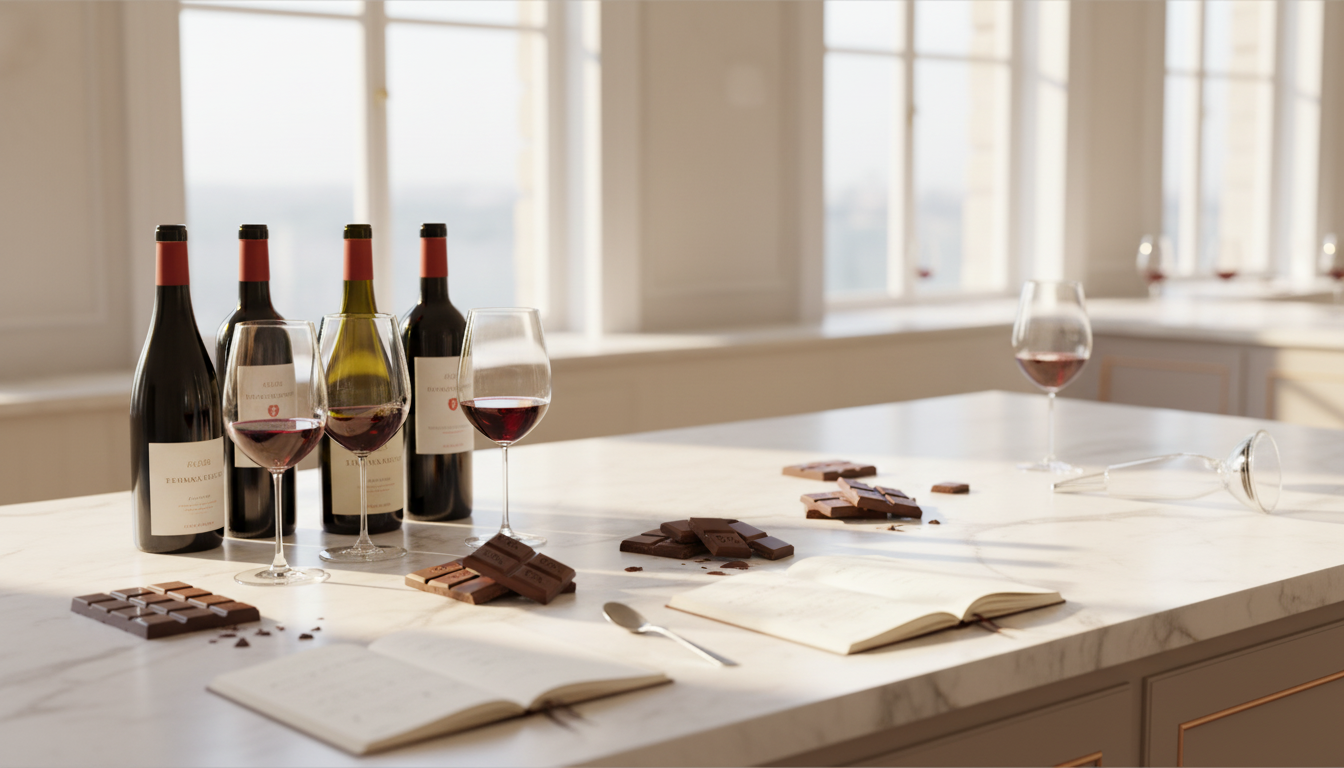
This definitive primer demystifies the science and art of pairing fancy chocolate with wine, showing how matching volatile compounds, intensities, and structural elements like tannins, sweetness, and acidity transforms two complex foods into harmonious, elevated experiences. Readers learn to select chocolates by cacao percentage and origin—whether a 70% Madagascan dark or a buttery white chocolate—and pair them with wines from delicate Albariño to fortified Banyuls, while debunking myths that only sweet reds work and discovering unexpected matches like Champagne with white chocolate or dry Sherry with salted caramel dark. The guide walks through crafting terroir-driven flights, mastering sensory technique, and presenting pairings with visual flair, then points to professional certification, flavor standards, and trend-tracking tools that keep palates current in a fast-growing $220 billion market now shaped by sustainability, traceability, and functional indulgence.
Foundations of Fancy Chocolate and Wine Pairing
Master the art of chocolate-wine harmony by matching shared volatile compounds and intensities—like pairing demi-dry Chardonnay with white chocolate or Fetească neagră with 70-95% dark—to unlock the 80% of flavor that comes from aroma, not taste buds.
The Science Behind Flavor Synergy
Taste is a complex sensory experience where only 20% comes from our taste buds while 80% derives from aroma [1]. With 9,000 taste buds detecting sweet, salt, sour, and bitter compared to 5-10 million smell receptors, our olfactory system significantly influences how we perceive flavor combinations [1]. As second-generation chocolatiers at andSons, we've observed how the fundamental principle behind successful chocolate and wine pairings lies in shared volatile compounds.
When two foods contain similar flavor molecules, they often create harmonious taste experiences when consumed together [1]. This concept, pioneered by scientist François Benzi, explains why seemingly unusual combinations like white chocolate and caviar work remarkably well [1]. Both wine and chocolate contain hundreds of flavor compounds that interact in complex ways [3]. The interplay between these elements creates the foundation for memorable pairings.
Research shows that matching intensities prevents either element from overwhelming the other—lighter chocolates pair better with lighter wines, while intense dark chocolates require fuller-bodied wines [3]. Wine attributes including sweetness, acidity, and alcoholic strength significantly impact pairing success [2]. Studies demonstrate that white chocolate pairs best with demi-dry Chardonnay, while dark chocolates with 70-95% cocoa create synergistic matches with sweet red wines like Fetească neagră [2].
Key Taste Components of Premium Chocolate
Premium chocolate contains hundreds of flavor compounds that interact in complex ways to create its distinctive profile [4]. Understanding these components forms the foundation for sophisticated pairings.
The cocoa variety itself—whether delicate Criollo, robust Forastero, balanced Trinitario, or floral Nacional—brings inherent flavor characteristics [5]. Processing methods further develop these components: fermentation (3-7 days) creates fruity and floral precursors; drying stabilizes these aromatic compounds; while roasting intensity determines whether bright fruity notes remain (light roast) or rich chocolate and caramel flavors dominate (dark roast) through Maillard reactions [5].
Our European heritage has taught us that premium chocolate's complete flavor profile includes fruity elements ranging from bright citrus to deep berries, nutty characteristics, floral notes, spicy undertones, earthy qualities, caramel richness, and balanced bitter elements—approximately 700 different compounds in total that create a multi-dimensional tasting experience [4]. These nuances become especially important when selecting chocolates for wine pairing, as discussed further in our guide to choosing the right fancy chocolate.
How Wine Structure Interacts with Chocolate
Wine's structural elements—tannins, acidity, sweetness, body, and alcohol—determine pairing success with chocolate. Tannins exist in both red wines and dark chocolate, creating either harmonious balance or astringent clashing depending on intensity [7]. When paired incorrectly, excessive tannins from both sources overwhelm the palate with a chalky sensation rather than smooth integration [7].
The fat content in chocolate, primarily from cocoa butter, requires wines with sufficient acidity or alcohol to cut through richness and cleanse the palate between bites [7]. Temperature plays a crucial role as chocolate melts near body temperature, gradually releasing flavors that interact differently with wines served at various temperatures [7]. The cardinal rule remains: wine should be at least as sweet as the chocolate to prevent tasting bitter or sour by comparison [6].
This sweetness principle explains why many successful pairings involve dessert wines with sufficient residual sugar to balance chocolate's inherent sweetness [7]. For balanced tannins, select wines with softer tannins like Merlot when pairing with dark chocolate, which creates a smoother experience than high-tannin options like Cabernet Sauvignon [6].
Common Myths About Fancy Chocolate and Wine Pairing Debunked
Contrary to popular belief, dry red wines can pair beautifully with dark chocolate when you select gently roasted, specialty-grade chocolate bars with less bitterness. Start with approachable origins like Madagascar, where the beans' natural sweetness and berry notes create crowd-pleasing matches with medium-bodied Merlots [8]. Another persistent myth suggests white wine doesn't complement chocolate, yet crisp whites can cut through rich, creamy chocolates perfectly. Try pairing a floral white like Albariño with a delicate 70% dark chocolate featuring bergamot notes, or match Chardonnay with chocolate made from white cacao beans [8].
The assumption that wine should always be sweeter than chocolate oversimplifies pairing possibilities. While dessert wines can work well, many craft chocolates aren't inherently bitter and pair successfully with dry wines when matched by body and intensity [8]. Perhaps most surprising is that sparkling wines, including Champagne, create exceptional pairings with white chocolate or creamy dark milk varieties—the bubbles and acidity balance the chocolate's richness [8]. Finally, despite what Valentine's Day marketing suggests, wine and chocolate aren't natural partners.
As Chef Carlo Zarri notes, "It is extremely difficult, almost impossible to pair wine and chocolate" without understanding their complex chemistry [10]. Success requires matching intensity—lighter chocolates with lighter wines, fuller-bodied chocolates with corresponding wines—while considering the 500+ chemical substances in chocolate that interact with wine's complex profiles [10].
Choosing the Right Fancy Chocolate
Match dark chocolate’s cacao percentage—60-69% for balanced sweetness, 70-79% for bold bitterness, 80%+ for terroir intensity—to a wine with equal or greater body and residual sugar to turn potential bitter clash into harmonious pairing.
Dark Chocolate Spectrum and Cacao Percentages
Dark chocolate's flavor profile varies dramatically with cacao percentage—the amount of cocoa solids and butter relative to sugar. Chocolate with 55%+ cacao content qualifies as dark chocolate, with most premium blends ranging between 70-80% for pronounced bitterness and complexity [11]. As percentage increases, sweetness decreases while intensity of flavor compounds grows. At 60-69%, chocolate maintains balance between sweetness and cocoa notes, making it accessible for those transitioning from milk chocolate.
The 70-79% range delivers pronounced bitterness with emerging fruity, floral, or nutty notes depending on origin. Chocolates at 80-89% exhibit intense complexity with significantly reduced sweetness, allowing terroir characteristics to dominate. Beyond 90%, only true enthusiasts typically appreciate the pronounced astringency and concentrated cocoa flavors. When selecting dark chocolate for wine pairing, focus on percentage as your primary guide.
Higher percentages demand wines with greater body and residual sweetness to prevent bitter clashes [11]. Premium chocolatiers carefully select cacao percentages that showcase specific flavor profiles—a practice that helps predict successful pairings. The cocoa variety and processing methods create additional nuances (as detailed in our earlier discussion of taste components), but percentage remains your most reliable indicator for matching wine intensity.
Milk and White Chocolate Characteristics
Milk and white chocolate characteristics
Milk chocolate sits between dark and white varieties with approximately equal parts chocolate and cream. This composition creates ganache-like textures and makes milk chocolate especially accommodating for wine pairings due to its moderate fat content [13]. The creaminess softens wine's tannins while providing a neutral backdrop that complements rather than competes with different wine styles. Milk chocolate typically displays caramel notes with subtle cocoa undertones, allowing it to pair successfully with medium-bodied red wines like Pinot Noir—particularly when the chocolate incorporates berries or cherry pieces [14].
White chocolate differs fundamentally from both dark and milk varieties because it contains no cocoa solids—the component responsible for traditional chocolate flavor [15]. Instead, it consists primarily of cocoa butter, milk solids, and sugar, giving it significantly higher fat content than other chocolate types [15]. This unique composition creates white chocolate's signature creamy texture and luxurious mouthfeel with distinctive vanilla, honey, and sweet cream notes [15]. Despite not being "true" chocolate by purist standards, white chocolate's high fat content and buttery richness create surprising versatility for wine pairing, including unexpected compatibility with dry red wines that might clash with darker chocolates [14].
The absence of cocoa solids means white chocolate lacks the bitter compounds that can conflict with certain wines, while its rich mouthfeel requires wines with sufficient acidity to prevent palate fatigue [15]. Late harvest whites like Riesling complement white chocolate particularly well, as their honeyed sweetness balances the chocolate's buttery character [13].
Single-Origin and Bean-To-Bar Considerations
Single-origin and bean-to-bar chocolates represent the pinnacle of chocolate craftsmanship, offering wine pairing opportunities based on terroir expression (explored in detail in our terroir-driven pairings section). When selecting these artisanal chocolates, prioritize makers who control production from bean sourcing through final bar creation, as this preserves distinctive regional characteristics [17]. The bean-to-bar movement has revolutionized chocolate selection by emphasizing transparency and origin specificity.
These chocolates undergo meticulous fermentation processes that develop complex flavor precursors [17], creating nuanced profiles ideal for sophisticated wine pairings. At andSons Chocolatiers, the selection process combines time-honored European techniques with modern flavor innovation, ensuring each chocolate offers distinct pairing potential.
For wine pairing purposes, taste the chocolate first to identify its dominant characteristics—whether bright and fruity, deep and earthy, or delicate and floral—then select wines that either complement or provide thoughtful contrast [18]. This intentional approach transforms chocolate and wine pairing from guesswork into an exploration of craftsmanship and terroir.
Seasonal, Limited-Edition, and Ethical Sourcing Trends in 2025
The chocolate market in 2025 has embraced seasonality as a core marketing strategy, with brands creating limited releases that drive anticipation and boost sales [19]. These aren't just holiday-themed packages but complex offerings with layered textures and unexpected flavor combinations designed for specific times of year. Consumers increasingly expect transparency in sourcing—28% now investigate cacao origins before purchasing, nearly double the 16% reported in 2018 [20].
This shift has made traceability non-negotiable, with brands investing in digital tools that verify and communicate their sourcing practices through QR codes and interactive packaging [19]. The 2024-25 cocoa price crisis heightened awareness of production conditions, further cementing consumer demand for ethical verification [19]. Sustainability has evolved from competitive advantage to baseline expectation, with one-third of consumers willing to pay more for sustainably packaged chocolate [19].
Tech-supported traceability has become standard, as chocolate makers implement blockchain and digital monitoring to provide data-driven proof of ethical practices rather than vague sustainability claims [19]. For 2025, successful brands are focusing on regenerative farming practices, quantifiable environmental impact, and transparent supply chains that show real benefits to farming communities [19]. Limited-edition releases increasingly highlight single-origin beans with distinctive terroir characteristics, connecting exclusivity with ethical production stories [20].
Selecting Complementary Wines for Pairing
Match your dark chocolate’s intensity with a velvety Argentine Malbec or a ruby Port to amplify its fruity depths, then switch to an elegant New Zealand Pinot Noir when serving creamier milk or white chocolates.
Red Wines That Enhance Deep Cocoa Notes
For connoisseurs seeking the perfect marriage of wine and dark chocolate, understanding which reds enhance rather than clash with deep cocoa notes becomes essential. As discussed in the foundations section, matching tannin levels prevents overwhelming astringency. Port remains a timeless choice—ruby port's vibrant fruit and spice notes elevate dark chocolate ganache, while tawny port's oxidative character of dried fruits and nuts creates magic with chocolate-covered almonds [21]. From Argentina's sun-drenched vineyards, Malbec brings natural chocolate aromas and velvety texture that complement dark chocolate's fruity undertones without competition [21].
California Zinfandel offers bold fruit with vanilla and pepper notes that transform spicy chocolate into an adventure—imagine andSons' signature dark chocolate bonbons paired with a jammy Zin for an unforgettable Beverly Hills tasting experience. When selecting Cabernet Sauvignon, prioritize warmer climate bottles from Napa or Australia where fully ripened grapes develop gentler tannins [21]. New Zealand and California Pinot Noir provides elegant versatility, with delicate berry notes that enhance rather than mask chocolate's complexity [21].
For those ready to explore beyond traditional pairings, French Banyuls delivers caramel and dried fruit notes that beautifully offset dark chocolate's intensity [21], while Italian Recioto's concentrated cherry character stands up to the boldest cacao percentages [21]. Spanish Tempranillo deserves special mention—its characteristic dark plum and cinnamon notes create synergy with berry-infused dark chocolates, while inherent vanilla and cocoa powder flavors echo chocolate's own complexity [22].
White, Rosé, and Sparkling Options for Lighter Chocolates
The delicate nature of white and milk chocolates demands a sophisticated approach to wine selection that respects their creamy profiles. These lighter confections, with their higher fat content from cocoa butter and milk solids, welcome wines that might overwhelm darker varieties. A crisp Sauvignon Blanc acts as a palate-cleansing counterpoint to white chocolate's richness while drawing out subtle fruit notes [15]. For those who appreciate indulgence, buttery California Chardonnay mirrors white chocolate's luxurious texture, creating what wine experts call "textural harmony" [24]. Milk chocolate finds its perfect partner in German Riesling, where bright acidity and stone fruit sweetness enhance rather than mask the chocolate's caramel notes [24]. Late-harvest Gewürztraminer takes this pairing to new heights—its exotic spice and apricot character elevates white chocolate's nuanced flavor profile, particularly when paired with premium European-style confections [24]. Rosé wines offer exceptional versatility with lighter chocolates through their bright fruit characteristics and moderate structure.
The strawberry and raspberry notes found in many rosés naturally complement white chocolate's creamy profile while providing enough acidity to cut through milk chocolate's richness [24]. This adaptability makes rosé particularly effective with chocolates containing berry or fruit inclusions—creating natural flavor bridges that enhance both elements [23]. West coast rosés with pronounced strawberry notes create especially harmonious pairings with white chocolate, highlighting its delicate vanilla and cream flavors [24]. Sparkling wines transform chocolate tasting through effervescence. The bubbles in Prosecco, Cava, or Champagne provide textural contrast and palate-cleansing refreshment between bites of creamy white chocolate [15]. For milk chocolate, options range from Extra Dry to Demi-Sec Champagne, each providing varying sweetness levels to match the chocolate's own sugar content [24]. Sparkling rosé creates exceptional pairings with both white chocolate and creamy milk varieties—the combined bubbles and berry notes adding complexity to the tasting experience [23].
The light, airy nature of both sparkling wine and white chocolate creates a beautiful harmony on the palate, preventing either element from dominating [15]. Temperature precision elevates these pairings from pleasant to extraordinary. Serve white wines at 45-50°F to preserve their refreshing qualities against chocolate's richness [23]. The art lies in timing—let premium chocolate melt slowly on your palate, allowing cocoa butter to release its full flavor spectrum before sipping wine [15]. This technique proves especially crucial with white chocolate, where temperature-controlled flavor release creates a sophisticated tasting journey [15].
Dessert, Fortified, and Natural Wine Selections
Dessert and fortified wines unlock chocolate's hidden dimensions through their concentrated flavors and residual sweetness. As established in our foundations discussion, matching sweetness levels remains paramount. Fortified wines like vintage Port bring the necessary structure—concentrated fruit, firm tannins, and elevated alcohol—to stand alongside intense dark chocolate [25]. Tawny Port's oxidative notes of hazelnut, caramel, and dried orange peel create memorable pairings with nut-studded chocolates, while Ruby Port's fresh berry character enhances chocolate ganache [25].
French Banyuls represents fortified elegance, its Grenache base offering red fruit and citrus notes that complement fruit-forward chocolate creations [25]. For a playful twist, Italian Brachetto d'Acqui—lightly sparkling with rose and berry aromas—transforms chocolate-dipped strawberries into a celebration [25]. White and milk chocolates find their match in Australian "stickies," where Liqueur Muscat and Muscadelle deliver butterscotch and dried fruit complexity perfect for pralines and gianduja [25]. Sherry deserves special attention from sophisticated palates.
Pedro Ximénez's treacly richness and coffee notes create harmony with dark chocolate, while its saline edge makes it the ideal partner for salted caramel confections [25]. Premium Champagne offers unexpected versatility, its effervescence and acidity providing refreshing contrast to creamy chocolate desserts [26]. For the adventurous, aged Sauternes develops exotic saffron and quince notes that beautifully complement citrus-infused chocolates [26]. Natural wines expressing true terroir create fascinating origin-based pairings—bright Madagascar chocolate sings with vibrant Grenache, while Venezuelan cacao's deep character demands Syrah's bold structure [18].
Emerging Sustainable Wine Trends for 2025
The sustainable wine revolution reshaping 2025's pairing landscape reflects the values of discerning chocolate enthusiasts. With organic wine conversations surging 150% year-over-year on social platforms, this movement transcends trend status [27]. These wines—crafted without synthetic interventions—often exhibit more expressive terroir that beautifully complements artisanal chocolate's nuanced profiles [27]. Today's conscious consumers, particularly millennials and Gen Z, view sustainability as non-negotiable, ranking it among the top two purchase drivers [27].
The appeal extends beyond ethics: many organic wines feature reduced sulfites, creating what sommeliers describe as cleaner finishes that allow chocolate's complexity to shine [27]. This aligns perfectly with the low-intervention philosophy embraced by premium chocolatiers who prioritize pure cacao expression. Biodynamic wines represent the pinnacle of this movement. Producers following lunar cycles and holistic farming create wines of remarkable intensity—imagine Koyle's biodynamic Cabernet Sauvignon paired with single-origin 85% dark chocolate for a transcendent experience [28].
While challenges remain—certification inconsistencies and elevated production costs—educated consumers recognize the value proposition [27]. For pairing enthusiasts, this evolution opens exciting doors. Vegan-certified wines ensure no animal products interfere with chocolate's pure flavors, while natural fermentation creates unique flavor compounds that complement rather than mask cacao's terroir [28]. As we move through 2025, expect sustainable wines to become the preferred choice for premium chocolate pairings, where ethical production enhances rather than compromises the tasting experience [27].
Crafting Signature Pairings and Tasting Flights
Master the art of chocolate-wine alchemy by pairing 70%+ dark chocolate with blackberry-rich Cabernet Sauvignon, or let silky Pinot Noir transform milk chocolate into a chocolate-dipped strawberry revelation.
Classic Pairings with Detailed Tasting Notes
Dark chocolate and Cabernet Sauvignon represent a masterclass in sophisticated pairing—where the chocolate's complex bitterness dances with the wine's structured tannins, each elevating the other's finest qualities. For artisanal 70%+ dark chocolate, seek Cabernets with pronounced blackberry and cassis notes that stand confidently alongside the chocolate's intensity. Milk chocolate unveils its most seductive qualities when paired with Pinot Noir. The wine's silky texture and bright red fruit essence embrace milk chocolate's buttery sweetness, creating an experience reminiscent of chocolate-dipped strawberries at their peak ripeness [29]. For the adventurous palate, dark chocolate infused with fleur de sel caramel transforms when paired with aged Sherry.
The wine's toasted walnut and dried fig notes weave through the caramel's butterscotch richness, while the chocolate provides a sophisticated bitter counterpoint [29]. This alchemy occurs as cocoa butter gently softens the wine's edges, creating liquid velvet on the palate [3]. White chocolate—often dismissed by purists—reveals unexpected sophistication alongside Moscato d'Asti. When enhanced with toasted coconut, the pairing evokes a tropical sunset, with the wine's delicate effervescence lifting the chocolate's creamy richness like ocean spray [29]. The temperature play as chocolate melts against cool wine creates textural poetry [3].
Contemporary chocolatiers embrace fruit-forward combinations, particularly dark chocolate enrobing fresh raspberries. These find their soulmate in a crisp Provence Rosé, where the wine's wild strawberry notes amplify the berry's tartness while tempering the chocolate's intensity [29]. Such pairings demonstrate how shared aromatic compounds create flavor harmonies that exceed their individual components [3].
Innovative Terroir-Driven Chocolate and Wine Combos
Terroir—that ineffable sense of place captured in both grape and cacao—offers sophisticated palates infinite pairing possibilities. As wine connoisseurs distinguish between Left Bank and Right Bank Bordeaux, chocolate aficionados recognize the distinct personalities of each cacao origin [18]. Madagascar cacao typically delivers bright citrus and tart berry notes that pair exceptionally with vibrant reds like Grenache or Beaujolais, creating harmonious brightness without either element overwhelming the other [18]. Venezuelan cacao produces deeper, more robust flavors of raisin, molasses, and warm spice, making it ideal for full-bodied reds like Syrah or Malbec that bring complementary structure and bold fruit [18].
Peruvian chocolate often carries nutty, floral, or creamy notes that complement delicate Pinot Noir or lightly oaked Chardonnay, allowing subtle layers to emerge without overwhelming the chocolate's natural profile [18]. Marou exemplifies the terroir approach in chocolate making—sourcing beans from specific Vietnamese regions to create distinctive bars, effectively dividing the country into chocolate growing regions similar to wine appellations [16]. This parallel between wine and chocolate terroir extends to production methods—both require careful fermentation that develops flavor precursors and unique aromatics [18]. When creating terroir-driven pairings, focus on structural elements like tannins, which exist in both red wines and dark chocolate, creating either harmonious balance or astringent clashing depending on intensity [30].
Estelle Tracy, food writer and chocolate sommelier, recommends pairing specific origin-driven bars with complementary wines: "I love pairing Amano's Raspberry Rose with Pinot Noir and the Citrus Mélange à Trois with sparkling or white wines" [18]. The concept of chocolate vintages remains largely unexplored but offers fascinating potential—most cacao-growing regions harvest twice yearly (wet and dry seasons), adding another layer of complexity to terroir-focused pairings [16].
Designing a Balanced Tasting Flight Experience
Designing a balanced tasting flight experience
Orchestrating a memorable chocolate and wine flight requires the precision of a conductor leading a symphony. Three principles guide the experience: harmonious sweetness levels (as explored in our foundations section), thoughtful intensity progression, and deliberate sensory pacing. Begin your journey with approachable pairings—perhaps a silky 56% Venezuelan origin with tawny Port—before ascending to bolder territories like single-origin 72% Tanzanian paired with old-vine Zinfandel [31]. For optimal portion sizes, pour approximately 2 ounces of wine per tasting, which means one standard bottle serves six people with proper tasting portions [32].
When selecting flight themes, consider comparative approaches: regional flights that showcase how terroir shapes flavor (like Madagascar vs. Venezuelan chocolate paired with corresponding regional wines), vertical progressions that demonstrate intensity development (from white to milk to dark chocolate with appropriately matched wines), or varietal explorations that highlight different cacao percentages with complementary wine structures [32]. Limit total pairings to six to eight per session, taking short breaks between flights with water and neutral crackers to reset your palate [32]. For formal evaluations, save assertive foods for after tasting and stick with neutral palate cleansers during the experience [32].
To eliminate bias, consider blind tasting by covering bottles or decanting into numbered carafes, revealing identities only after everyone has formed their opinions [32]. The ideal group size for a chocolate and wine tasting is four to six people, creating optimal discussion opportunities while ensuring adequate portions [32]. This size balances conversation with tasting focus while allowing participants to comfortably share observations without judgment—remember that the goal is exploration, not competition [32].
Presentation Techniques for Visual Impact
Visual artistry elevates chocolate and wine pairings from mere tasting to theatrical experience. The principle of asymmetric beauty—arranging elements in dynamic rather than rigid patterns—mirrors the aesthetic philosophy behind handcrafted bonbons, where each piece tells its own story [33]. Temperature becomes crucial to presentation integrity; maintain chocolates at their optimal 60-65°F, avoiding the dual perils of ambient heat that threatens structural elegance and excessive cold that dulls both appearance and flavor release [34]. Color contrast dramatically enhances visual impact—dark chocolate pops against white plates while white chocolate creates striking contrast against dark surfaces like slate or wood [34].
Height and dimension elevate presentations beyond flat arrangements; build vertical elements by stacking complementary chocolates or using sculptural pieces as centerpieces alongside wine glasses [33]. When serving multiple pairings, provide visual breathing room—overcrowded presentations diminish impact while strategic use of negative space frames each element like artwork [33]. For texture variation, pair smooth ganache with crunchy elements like tuiles or brittle, creating both visual and taste contrast [33]. Presentation surfaces become canvases for chocolate artistry—select vessels that complement your creations' architecture, offering delicate ganaches proper support while allowing sculptural pieces room to command attention [34].
Service tempo proves critical; temperature-sensitive confections like Sauces add elegant finishing touches—use squeeze bottles for precise dots or the back of a spoon to create artistic swooshes that complement rather than overwhelm the chocolate [33]. Ultimately, presentation serves as invitation to indulgence. Whether channeling European elegance or embracing California creativity, let each arrangement tell the story of craftsmanship behind both chocolate and wine, creating moments that linger in memory long after the last bite melts away [35].
Advancing Your Palate and Staying Current
Master chocolate-and-wine pairing by logging 10,000 hours with FlavorActiV’s GMP standards, 100-daily-sample intensives, and digital benchmarks that teach you to let Hawaiian chocolate melt, taste its tropical aromas, and map every tannin to wine.
Sensory Training Tools and Modern Apps
Developing a sophisticated palate for chocolate and wine pairing requires specialized tools that train your senses to identify subtle flavor nuances. Professional organizations like FlavorActiV offer standardized references through their GMP Chocolate Flavour Standards—capsules containing specific flavor compounds that help tasters recognize both positive attributes and defects in chocolate [36]. These sensory standards create a consistent language for describing chocolate characteristics across cultures, with training available in over 20 languages [36].
For systematic development, intensive tasting programs expose participants to up to 100 different chocolate samples per day, allowing them to build comprehensive flavor memory—following the principle that expertise requires approximately "10,000 hours" of practice [38]. These structured programs help tasters differentiate between origin characteristics, processing variations, and quality levels while teaching techniques to mitigate palate fatigue during extended tasting sessions [38]. Digital evaluation platforms enable tasters to record assessments against global benchmarks, with proprietary software providing comparative analysis of tasting abilities across worldwide data [36].
Proper sensory technique includes letting chocolate melt on the tongue before biting to experience how flavors unfold sequentially—a method recommended by experts like Thalia Hohenthal from Guittard, who emphasizes identifying specific attributes such as "tropical aromas" in Hawaiian chocolate or "balanced tannins" in dark varieties [37]. Professional training programs typically combine theoretical knowledge with practical tasting, creating a foundation for recognizing the sensory connections between wine and chocolate, such as fermentation characteristics, tannin structure, and regional flavor expressions [37].
Exploring Unconventional Pairings and Flavor Twists
Conventional chocolate and wine pairings often follow predictable rules, but true flavor exploration happens at the boundaries. Chocolate with peanut butter creates a rich, salty-sweet experience that pairs surprisingly well with Merlot's soft tannins and fruity undertones [29]. The combination allows the wine to cut through the rich creaminess while complementing the nutty elements.
Another unexpected match combines dark chocolate sea salt caramels with Sherry—the wine's nutty profile and subtle sweetness accentuates the caramel while enhancing the chocolate, with the salt providing a flavor-awakening sparkle [29]. For those seeking tropical escape, dark chocolate with coconut finds harmony with Moscato d'Asti, whose floral sweetness and gentle effervescence highlight the exotic notes without overwhelming the palate [29]. Milk chocolate pretzels demonstrate how textural contrasts create memorable pairings—their salty crunch matches beautifully with Riesling's acidity and sweetness, creating perfect balance between wine and chocolate [29].
Seasonal fruits introduce another dimension, as seen with chocolate-dipped apples paired with Chardonnay, where the wine enhances the fruit's natural flavors while complementing the chocolate coating [29]. For coffee enthusiasts, milk chocolate with coffee caramel elements pairs wonderfully with Port, whose profound sweetness and coffee-like undertones mirror the chocolate's complex profile [29].
Tracking Industry Innovations and 2025 Trends
The wine-chocolate market is expanding rapidly as a premium segment within luxury confectionery, projected to reach $219. 9 billion by 2033 with a 2. 8% CAGR [39]. This growth stems from shifting consumer values rather than mere indulgence—78% now seek natural ingredients while expecting multi-sensory experiences that combine flavor complexity with ethical production [19].
Digital traceability has become essential rather than optional, with consumers increasingly investigating sourcing before purchasing—28% now research cacao origins compared to just 16% in 2018 [20]. The most successful innovations combine functional wellness benefits with pleasure, incorporating adaptogens and mood-enhancing ingredients without compromising taste [20]. Technology is reshaping production fundamentals, with lab-grown alternatives addressing environmental concerns while AI-driven flavor development creates precision-targeted pairings [20]. Sustainability has evolved from marketing advantage to baseline expectation, with one-third of consumers willing to pay premium prices for environmentally responsible products [19].
Regional preferences show significant variation: North America leads functional innovation, Europe emphasizes ethical sourcing, Asia-Pacific embraces novel flavor combinations, and Latin America highlights heritage ingredients [20]. The industry's future lies in connecting these trends—creating multi-sensory pairing experiences that deliver on health benefits, sustainability credentials, and premium indulgence simultaneously [20]. For pairing specialists, the emerging focus on texture provides fertile ground for innovation, with careful attention to how chocolate mouthfeel interacts with wine structure becoming as important as flavor compatibility [19].
Resources for Continued Mastery of Fancy Chocolate and Wine Pairing
Formal certification provides structured pathways to develop sophisticated tasting skills. The International Institute of Chocolate & Cacao Tasting offers multi-level certificates that methodically build expertise through sensory training. Their courses approach chocolate tasting with the same rigor as wine education, with options ranging from introductory sessions to advanced three-day intensives available online and in global locations including Bangalore, Tokyo, and Guatemala [40].
For self-guided learning, "Dare to Pair: The Ultimate Guide to Chocolate and Wine Pairing" presents 40 wines with paired chocolate recommendations, including practical information on proper glassware, tasting techniques, and regional characteristics [41]. The book's accompanying online class teaches enthusiasts how to lead their own pairing events—turning personal passion into potential income [41]. Chocolate sommelier Estelle Tracy offers a free e-book, "The Beginner's Guide to Pairing Wine & Chocolate," developed from her experience hosting hundreds of tastings for clients including Google and LVMH [42].
Her practical approach doesn't require extensive wine knowledge, instead providing clear starting points with specific bottle recommendations and complementary chocolate suggestions [42]. For hands-on experience, Tracy curates a five-bar chocolate bundle specifically selected to pair with the wines recommended in her guide, creating an accessible entry point for beginners [42].
- Match wine sweetness to chocolate: wine must be at least as sweet to avoid bitter clash.
- Pair by intensity—light chocolates with light wines, bold chocolates with full-bodied wines.
- Dark chocolate 70%+ pairs best with sweet reds like Port or Malbec to soften tannins.
- White chocolate’s high fat content works with crisp whites or even dry reds due to no cocoa solids.
- Single-origin chocolates express terroir; match Madagascar’s citrusy beans with bright Grenache.
- Serve whites at 45–50°F and let chocolate melt on tongue before sipping for optimal release.
- Limit tastings to 6–8 pairings, use neutral crackers and water to reset palate between flights.
- https://khymos.org/molecular-gastronomy/flavor-pairing/
- https://pmc.ncbi.nlm.nih.gov/articles/PMC10529128/
- https://lakechelanwinevalley.com/the-science-of-wine-chocolate/
- https://cocoanusa.com/articles/chocolate-flavour-profile/
- https://sosa-conf.com/en/general-insight-en/cocoa-powder-taste-profile-2/
- https://www.brookswine.com/surprising-complexity-of-pairing-wine-chocolate/?srsltid=AfmBOoqfD4VUEnfVd0x1-AzoDTEJx87VQwIeHrxjXIS1iKychrm4I3-m
- https://grahamandfisk.com/blogs/news/the-ultimate-guide-to-pairing-wine-with-chocolate-best-combinations-and-tips?srsltid=AfmBOoq5fCe7kNwL42r4DtZjDo_zgeA_hsgGHnb8qV1PYznv3e-UfQD9
- https://37chocolates.com/2020/01/02/5-myths-about-wine-and-chocolate-pairing/
- https://www.thewinesisters.com/blog/post/wine-and-chocolate-dont-work.-stop-trying
- https://columbiametro.com/article/an-imperfect-pairing/
- https://chocovivo.com/blogs/articles/the-ultimate-guide-to-pairing-dark-chocolate-with-different-types-of-chocolate
- https://perfectdailygrind.com/2017/09/beginners-guide-cacao-chocolate-flavour-profiles/
- https://cocoarunners.com/chocopedia/pairing-chocolate-and-wine/
- https://perfectdailygrind.com/2019/11/chocolate-wine-how-to-plan-a-perfect-match/
- https://amanochocolate.com/the-art-of-pairing-artisan-chocolate-and-fine-wine/
- https://lukerchocolate.com/en/knowledge-base/chocolate-confectionery-trends
- https://www.gourmetpro.co/blog/top-global-chocolate-trends
- https://www.tastingtable.com/1700532/best-wines-pair-dark-chocolate/
- https://murrietaswell.com/blog/stories/perfect-pairings-wine-chocolate-with-murrietas-well-wines/
- https://www.wineandchampagnegifts.com/blog/wine-and-chocolate-pairings-guide/?srsltid=AfmBOoq1zC6TD8fBeEqq9VjwQXHs5c8GiKU5DMgq7XkztUwEW4OP8jdT
- https://ingoodtaste.com/blogs/wine-101/wine-chocolate-pairing?srsltid=AfmBOooQ8XyRfJLdkPqTFykli6lJlDQrSY098xFbf16T-zv0v2BOVwgg
- https://www.winespectator.com/articles/abcs-of-pairing-wine-and-chocolate
- https://guide.michelin.com/th/en/article/dining-in/michelin-restaurant-sommeliers-tips-for-dessert-wine-pairings
- https://tastewise.io/blog/organic-wine-trends
- https://naturalmerchants.com/organicwines/organic-wine-and-chocolate/
- https://fundraising.gertrudehawkchocolates.com/discover-goodness/wine-chocolate-pairing-guide
- https://www.wine4food.com/editors-picks/wine-and-chocolate/
- https://www.culinaryartsswitzerland.com/en/news/plating-food/
- https://deepplate.bauscherhepp.com/blog/three-tips-for-displaying-and-plating-chocolate
- https://hospitalityinsights.ehl.edu/plating-food
- https://www.flavoractiv.com/chocolate-sensory-solutions/
- https://rmi.ucdavis.edu/blog/chocolate-wine-devine
- https://www.chocolatetastinginstitute.org/courses/level-1-chocolate-tasting-intensive-tasting-training-chocolate-tasting-intensive-tasting/
- https://www.linkedin.com/pulse/wine-chocolate-market-insights-innovation-sustainability-xfa4f/
- https://www.chocolatetastinginstitute.org/
- https://www.thechocolatetherapist.com/product/chocolate-and-wine-pairing-book/
- https://37chocolates.com/2024/04/19/the-beginners-guide-to-pairing-wine-chocolate/