


Chocolate and Wine Pairing Guide: Perfect Flavor Matches
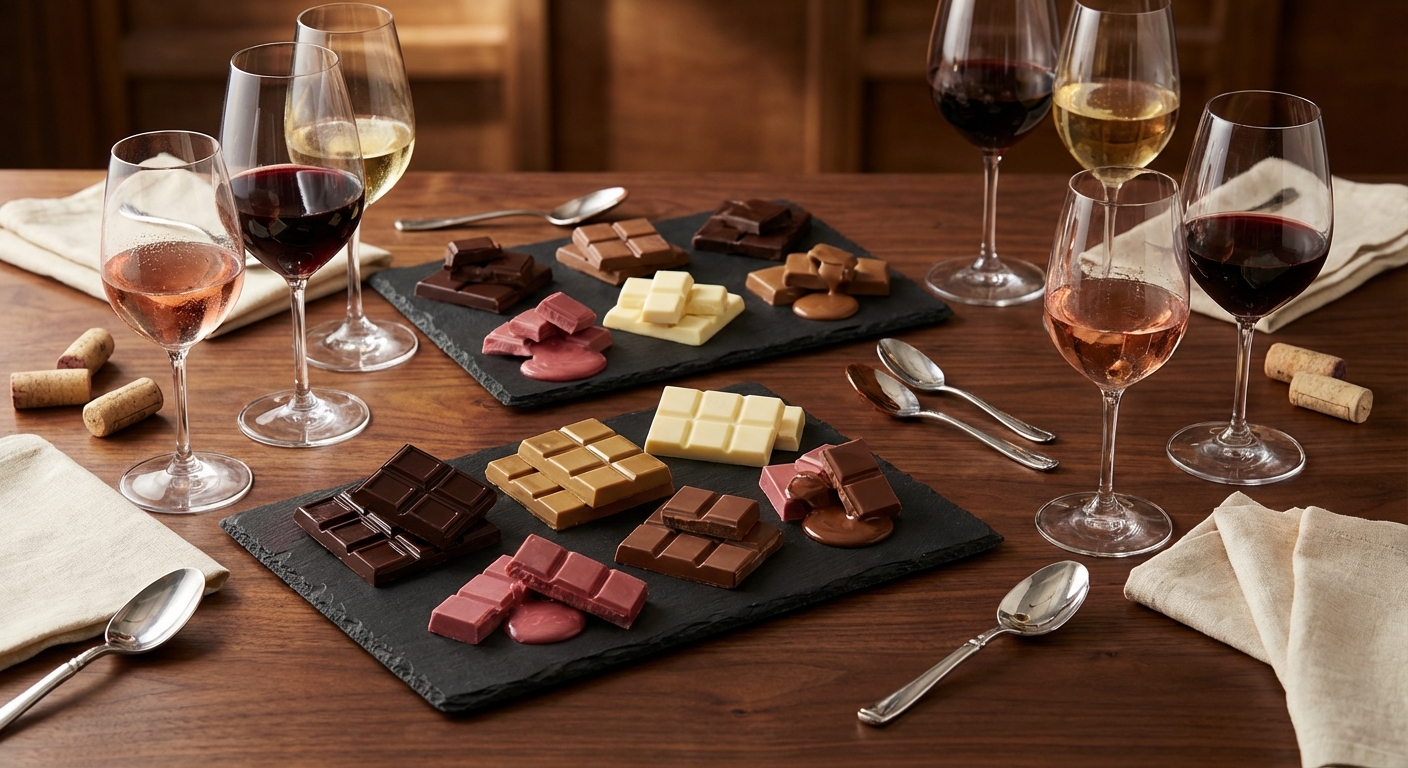
Master the art of chocolate and wine pairing by understanding how each chocolate's unique flavor profile--dark's tannic depth, milk's caramel creaminess, white's vanilla-rich sweetness, or ruby's berry tang--interacts with wine's sweetness, acidity, body and tannins so you can confidently match Port or Pinot Noir with dark, off-dry Riesling or Grenache with milk, late-harvest whites with white chocolate and sparkling rosé with ruby for harmonious, elevated tastings. The article demystifies the science behind why wines must be at least as sweet as the chocolate, how chilled service temperatures and a three-step tasting sequence unlock hidden notes of fig, cocoa and caramel, and which practical hosting details--half-bottle per person, palate cleansers, elegant progression from light to intense pairings--transform a casual nibble into a memorable sensory journey. Readers will learn to avoid common pitfalls like harsh tannin clashes, select fortified or fruit-forward wines that amplify chocolate's complexity, and curate 3-4 exemplary pairings that showcase European tradition and modern innovation, all while discovering how temperature, texture and complementary flavors create perfect, balanced bites every time.
Understanding Chocolate and Wine Pairing Fundamentals
Mastering the flavor signatures--dark's red-fruit bitterness, milk's caramel creaminess, white's vanilla richness, and ruby's berry-like tang--lets you match each chocolate type to a wine that amplifies both.
Flavor Profiles of Common Chocolate Types
Understanding chocolate's distinct flavor profiles is essential for creating successful wine pairings. As second-generation chocolatiers, we've learned that each type offers unique characteristics that complement different wines when properly understood. Dark chocolate contains at least 35% chocolate liquor with no added milk, giving it a firm texture and characteristic snap when broken [1]. Its flavor ranges from slightly sweet with notes of baked brownie and red fruit to intensely bitter in higher-percentage varieties [2]. Bittersweet dark chocolate (typically 66%+ cacao) delivers deeper, less sweet profiles with earthy undertones and occasional hints of cinnamon or allspice [2]. In our bonbon collections, we harness these complex profiles to create sophisticated pairings. Milk chocolate combines chocolate liquor with sugar and milk, requiring at least 10% chocolate liquor and 12% milk [3]. This creates a creamy texture with sweet, chocolatey flavors complemented by notes of caramelized sugar, cooked milk, and vanilla [2]. The added dairy mellows the bitter cocoa notes, resulting in a more approachable profile than dark varieties [3]. This balance makes milk chocolate particularly popular in European confectionery traditions. White chocolate contains no cocoa solids--only cocoa butter, sugar, and milk (minimum 20% cocoa butter and 14% milk) [1].
It offers a sweet, creamy profile dominated by condensed milk and vanilla notes [2]. Despite debates about its chocolate status, white chocolate's rich mouthfeel and subtle sweetness make it particularly versatile for pairings [2]. Master chocolatiers appreciate its ability to carry delicate flavors. Ruby chocolate, introduced in 2017, derives its distinctive red-pink color and fruity profile from the ruby cocoa bean [3]. With no added berries or flavorings, it delivers naturally sweet yet sour notes with intense fruitiness [1][3]. This newest chocolate variety creates unique pairing opportunities with its berry-forward character, inspiring modern chocolatiers to explore innovative combinations.
Key Wine Characteristics That Complement Chocolate
Successfully pairing wine and chocolate requires understanding key wine characteristics that enhance rather than clash with chocolate's complex flavors. From our Beverly Hills atelier, we've discovered that certain principles consistently guide successful pairings. Sweetness level is paramount--wine should be at least as sweet as the chocolate to prevent bitter or sour flavor experiences [4]. Wines with too little sweetness paired with sugary chocolate often taste harsh and unbalanced. This fundamental rule, explored further in our pairing recommendations, forms the foundation of all successful combinations.
Tannin structure significantly impacts pairings, as both wine and chocolate contain tannins that can either complement or overwhelm each other [5]. For darker chocolates, wines with moderate tannins like Merlot offer better balance than highly tannic Cabernet Sauvignon, which can create an overly astringent sensation [6]. Understanding this interaction helps explain why certain classic pairings endure. Acidity cuts through chocolate's fat content from cocoa butter, cleansing the palate between bites--this makes wines with bright acidity excellent companions for creamier chocolates [5]. The wine's body and intensity should mirror the chocolate's richness; delicate white chocolates pair beautifully with lighter-bodied wines, while intense dark chocolates demand fuller-bodied wines [4].
Complementary flavor notes create harmonious experiences--fruity wines enhance chocolate with berry undertones, while wines with nutty or toasty characteristics complement chocolates with similar profiles [5]. Temperature also plays a crucial role; slightly chilled wines offer refreshing contrast to chocolate melting at body temperature, highlighting different flavor dimensions in both [5]. These principles guide our approach to crafting chocolate experiences that honor both European tradition and California innovation.
Perfect Pairings for Every Chocolate Confection
Match your wine's sweetness to--or above--your chocolate's, then let a silky Pinot Noir amplify dark chocolate's hidden fig notes or cradle milk chocolate's creamy elegance without overwhelming it.
Dark Chocolate with Robust Red Wines
Dark chocolate's complexity creates an intriguing challenge for wine pairing enthusiasts. As discussed in our fundamentals section, the interplay of tannins requires careful consideration--both wine and chocolate contain these compounds that, when mismatched, can create unpleasant bitter or sour notes [7][9]. The golden rule remains: your wine should match or exceed your chocolate's sweetness level [8].
When a too-dry wine meets fine dark chocolate, the result disappoints--harsh tannins dominate while the chocolate's sophisticated flavor profile vanishes [8]. Fortified and sweet wines create magic with dark chocolate, consistently outshining standard dry reds. Port emerges as the classic pairing, coaxing out hidden notes of fig and stewed dates from quality dark chocolate [9].
For those preferring traditional reds, choose elegantly structured Pinot Noir over more tannic Cabernet Sauvignon, Merlot, or Zinfandel [9]. With careful selection, certain fruit-forward reds can complement high-percentage dark chocolate beautifully--seek bottles where ripe fruit characteristics balance the inherent cocoa bitterness [7]. Intensity matching becomes an art form with dark chocolate pairings.
Milk Chocolate with Fruit-Forward Whites and Rosés
Milk chocolate's velvety texture and gentle sweetness require a delicate touch in wine selection. Intense, high-tannin reds or sharply acidic whites can overwhelm its nuanced profile. Instead, seek fruit-forward wines that dance alongside rather than dominate milk chocolate's creamy elegance [10]. Light-bodied reds with restrained tannins prove ideal--Pinot Noir's silky texture and red berry notes create harmony with milk chocolate's sweetness while preserving perfect balance.
Consider also the plum and cocoa notes of Merlot, or explore Grenache, Beaujolais, Dolcetto, and Valpolicella for equally delightful pairings [10]. White wine aficionados will discover exceptional pairings in aromatic varieties with a kiss of sweetness. Gewürztraminer and off-dry to medium-sweet Riesling deliver complementary sweetness alongside refreshing fruit and floral notes that elevate milk chocolate's creamy character [10]. Rosé wines, especially rosé Port, create unexpected alchemy--strawberry nuances in the wine transform the pairing into something transcendent [11].
Don't dismiss sparkling options; the gentle sweetness and lively effervescence of Moscato d'Asti or Lambrusco (Dolce or Amabile) provide refreshing contrast to chocolate's richness while amplifying its inherent flavors [11]. For the ultimate after-dinner indulgence, dessert wines transform milk chocolate into an extraordinary experience. Moscatel de Setubal, Pedro Ximénez Sherry, and aged Vintage Port create memorable pairings that linger on the palate. A well-aged Montilla-Moriles produces an almost magical caramel-like sensation when savored alongside fine milk chocolate--a pairing that exemplifies the artistry possible when quality ingredients meet thoughtful selection [11].
Practical Tips for Serving and Tasting
Master the art of chocolate-wine pairing by serving wines at precise temperatures, tasting in a deliberate sequence, and following a three-step method that reveals hidden flavor interactions impossible to detect when consumed separately.
Temperature, Timing, and Presentation Guidelines
The temperature at which you serve both chocolate and wine dramatically affects their flavor profiles and pairing success. Serve red wines slightly cooler than room temperature (60-65 degreesF) and dessert wines lightly chilled (45-50 degreesF) to prevent alcohol from overwhelming subtle chocolate notes [12]. Always allow chocolate to reach room temperature before tasting--cold chocolate releases fewer aromatic compounds and masks complexity [12]. When planning your tasting sequence, begin with lighter combinations before progressing to darker, more intense pairings [14].
This prevents flavor fatigue and allows your palate to adjust gradually. For optimal flavor discovery, follow a three-step tasting method: first taste the chocolate, then the wine, then both together; reverse the order for your second tasting; finally, let chocolate begin melting on your tongue before adding a small sip of wine [14]. This methodical approach reveals interaction nuances impossible to detect when consumed separately. For presentation, serve chocolate pieces on small plates or decorative tasting spoons that highlight their visual appeal [13].
Quality chocolates deserve elegant presentation--artisanal bonbons like andSons' collection showcase their craftsmanship best when displayed individually. Wine glasses should be appropriate to the varietal--larger bowls for reds, narrower glasses for whites and desserts [13]. Arrange pairings in a deliberate progression, providing tasting notes that guide guests through the experience while encouraging personal discovery.
Creating a Pairing Experience at Home
A home chocolate and wine tasting celebrates the art of flavor discovery in an intimate setting. Calculate half a bottle (375ml) per person for a 2-3 hour experience--3-4 bottles for 4-6 guests, 5-6 bottles for 8-10 guests [15]. Rather than overwhelming guests with too many options, curate 3-4 thoughtfully selected pairings that showcase the range of possibilities discussed in earlier sections. Transform your space into a sensory journey with soft candlelight and elegant place settings that honor the chocolates' artisanal quality [15].
Provide palate cleansers--sparkling water with lemon, plain water crackers, or thin apple slices work beautifully to refresh between tastings [15]. Consider offering complementary elements like aged cheeses, fresh berries, or toasted nuts that enhance rather than compete with your chocolate selections [15]. Create tasting cards for each pairing, noting the chocolate's origin and flavor profile alongside the wine's characteristics. This encourages mindful tasting while helping guests remember their favorites [15].
For those seeking interactive experiences, a carefully curated chocolate fondue featuring premium chocolate paired with its ideal wine companion elevates the traditional format--imagine guests discovering how strawberries transform when dipped in dark chocolate while sipping a complementary Port [15]. The true luxury lies not in quantity but in quality--selecting exceptional chocolates and wines, presenting them beautifully, and creating space for genuine flavor discovery. This approach transforms a simple tasting into a memorable journey through the world of fine chocolate and wine.
- Wine must be at least as sweet as the chocolate to avoid harsh, bitter clashes.
- Dark chocolate pairs best with fortified or sweet wines like Port; avoid tannic reds.
- Milk chocolate harmonizes with light reds, off-dry whites, or sparkling Moscato d'Asti.
- Serve reds at 60-65 degreesF, dessert wines at 45-50 degreesF, and always let chocolate reach room temperature.
- Progress tastings from light to intense pairings, using a three-step taste method for clarity.
- Use 375 ml wine per person, provide palate cleansers, and limit event to 3-4 curated pairings.
- https://www.lakechamplainchocolates.com/types-of-chocolate/
- https://wildwestchocolate.com/blogs/news/different-types-of-chocolate
- https://en.wikipedia.org/wiki/Types_of_chocolate
- https://www.brookswine.com/surprising-complexity-of-pairing-wine-chocolate/?srsltid=AfmBOoouzWefz_HSS1KGS957e2ZWfK1c6OtC_DZaBNtefKgWCE1lw1J4
- https://lakechelanwinevalley.com/the-science-of-wine-chocolate/
- https://ingoodtaste.com/blogs/wine-101/wine-chocolate-pairing?srsltid=AfmBOorz1FifAHG4iExVxFAhJpv3ZvjJXB81AEWNN0CU_ZalK9f8fG2o
- https://winefolly.com/wine-pairing/what-wines-to-pair-with-chocolate/
- https://www.justinwine.com/blog/chocolate-wine-pairing-guide?srsltid=AfmBOoqkNq-_I8Wz92WOCcNebinwInLuD9W1h0RkjZTE9L-gxUWIq0hH
- https://toakchocolate.com/blogs/news/chocolate-pairing-recommendations
- https://www.riedel.com/en-us/blog/inspiration/world-chocolate-day
- https://winefolly.com/tips/5-badass-wine-and-chocolate-pairings/
- https://www.davisestates.com/blog/chocolate-wine-pairing/
- https://wesmarwinery.com/serving-chocolate-wine/
- https://perfectdailygrind.com/2019/11/chocolate-wine-how-to-plan-a-perfect-match/
- https://www.shotinthedarkmysteries.com/how-to-throw-a-wine-and-chocolate-party/