


Bird-Shaped Chocolate Prices 2026: Will This Luxury Fly Higher?
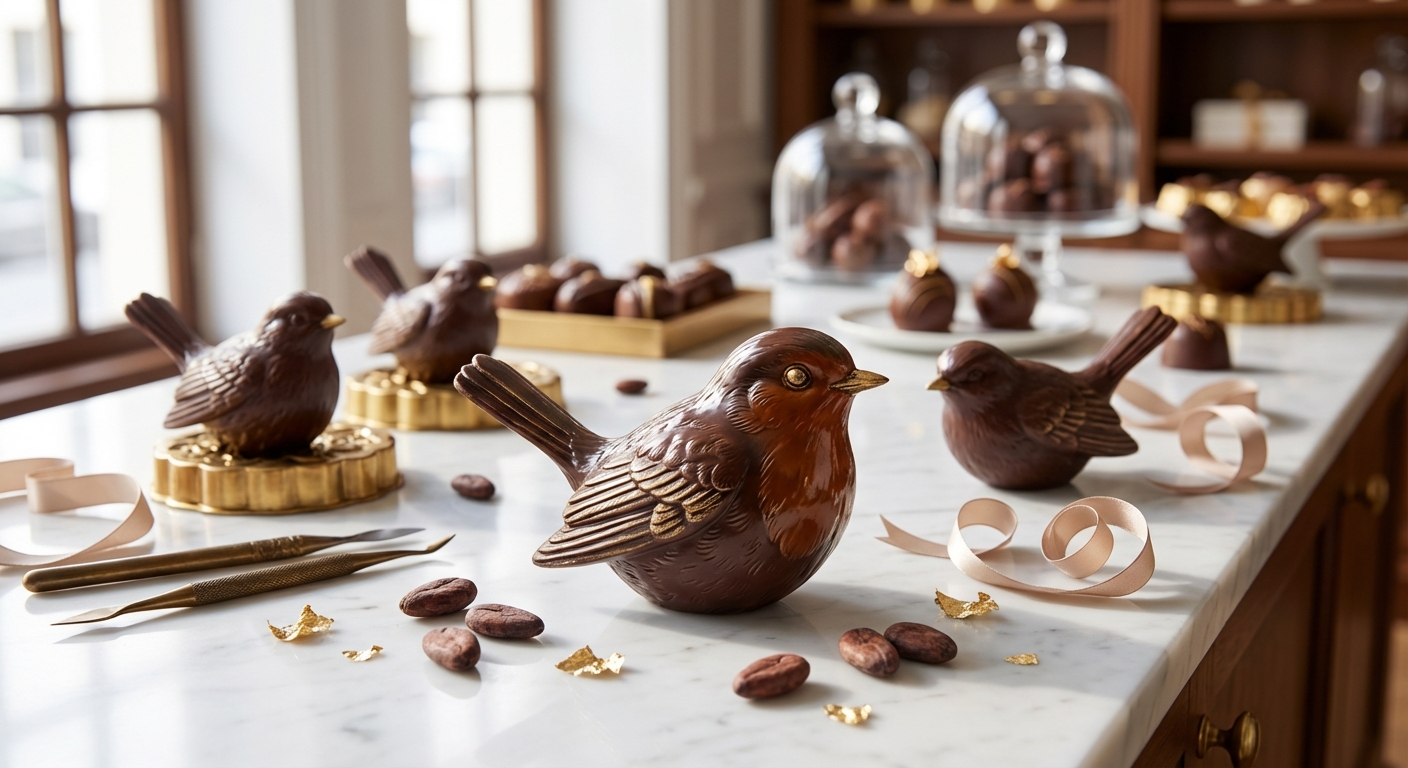
The 2026 market for bird-shaped chocolates is a fascinating intersection of art, agriculture, and behavioral economics, where cocoa at $6,000/ton and "minorstone celebrations" let consumers reward everyday wins with sculptural dark-chocolate swans that can fetch well above $10 apiece. Readers will learn how West African harvest volatility, Asian flavors like yuzu-matcha, and 83% demand for clean labels force artisans to lock in single-origin beans months early, swap in cocoa-butter equivalents to keep wing tips sharp, and still charge 8-15% more when bean-to-bar provenance is embossed on the box. The article maps three price tiers--premium (62% share), fastest-growing "affordable luxury" mid-range ($5-$10), and value seasonal entry SKUs--while showing why Europe keeps the highest list prices, Asia-Pacific delivers 10% CAGR, and online subscriptions outrun store sales. Strategic buying intel covers the eight-week freshness window, summer shipping arbitrage, and the post-Valentine's secondary market where limited-edition bluebirds can resell like art. Finally, it projects that dark avian sculptures will lead the segment from a $41B premium chocolate market in 2026 to as much as $217B by 2033, making today's $12 limited releases tomorrow's collectibles and proving that meticulous craftsmanship, planned scarcity, and transparent sustainability credentials--not just cocoa futures--will decide how high these edible luxuries fly.
Market Overview: 2026 Trends in Bird-Shaped Chocolate Pricing
Cocoa's wild ride from $12,000 to a forecasted $6,000 per tonne will decide whether your 2026 bird-shaped dark-chocolate gift feels like an affordable luxury or a deforestation-compliance premium.
Key Drivers Behind Price Shifts in 2026
The premium chocolate market, including specialty formats like bird-shaped chocolates, will grow from $39. 56 billion in 2025 to $41. 63 billion in 2026, reflecting a 5. 24% growth rate [1]. Cocoa price volatility represents the most significant factor affecting bird-shaped chocolate pricing in 2026.
After reaching unprecedented highs of over $12,000/tonne in late 2024, prices declined below $8,000/tonne during 2025 [2]. This volatility stems from structural supply issues in West Africa, climate impacts, and speculative trading that amplifies price movements [1]. Improved weather conditions are expected to boost production in the 2025/2026 season, potentially stabilizing prices around J. P. Morgan's forecast of $6,000/tonne [2].
Consumer perception of premium chocolates as an "affordable luxury" continues driving the artisanal segment, with bird-shaped offerings positioned as accessible indulgences despite economic uncertainties [1]. The rise of single-origin and bean-to-bar certifications significantly influences pricing structures, with tree-to-bar products becoming the fastest-growing premium segment [1]. These certifications allow manufacturers to command higher prices through authenticated origin claims. The EU Deforestation Regulation implementation adds compliance costs that disproportionately affect smaller artisanal producers of specialty items like bird-shaped chocolates, potentially reducing market competition and driving prices higher [1]. E-commerce expansion provides opportunities for premium bird-shaped chocolate makers to develop direct-to-consumer channels, enabling personalized offerings and subscription models that support premium pricing [1].
Comparative Price Benchmarks Across Premium Segments
Bird-shaped chocolates occupy a distinctive niche within the premium chocolate segment, which continues its robust growth trajectory. Within this market, bird-shaped chocolates face distinct pricing patterns across segments. Dark chocolate, holding approximately 60% market share, commands the highest price points among premium offerings [3]. This premium positioning reflects dark chocolate's perceived health benefits and sophisticated flavor profile. Meanwhile, milk chocolate variants, which constitute 62. 92% of the premium market, maintain mid-tier pricing that balances accessibility with premium attributes [1]. The premium milk chocolate segment's expected 9.
1% CAGR indicates strong value perception despite more moderate pricing [3]. Distribution channels significantly influence premium chocolate pricing structures. Specialty stores, which account for over 45% of premium chocolate sales, maintain the highest pricing due to curated experiences and exclusivity [3]. These venues typically position bird-shaped chocolates as artisanal showpieces with corresponding premium pricing. Online retail, growing at 7. 94% CAGR, features more competitive pricing despite offering similar premium products, as digital platforms eliminate physical retail overhead [1]. These digital platforms enable artisanal chocolatiers to showcase the craftsmanship behind bird-shaped creations--from hand-tempering to delicate sculpting techniques that distinguish true Geographic price benchmarking reveals Europe commanding 33.
12% market share, where premium chocolate commands the highest global price points [1]. European bird-shaped chocolate creations typically sell at 3-4 times the price of standard premium chocolate bars, reflecting their artisanal positioning and gifting appeal--a pricing strategy that resonates particularly well in luxury markets like Beverly Hills where discerning consumers value both heritage craftsmanship and innovative design. Asia-Pacific markets, while showing the fastest growth at 6. 92-10. 0% CAGR, maintain more accessible pricing for premium products to encourage adoption [1][3]. The global premium chocolate market's projected growth to $217. 15 billion by 2033 suggests bird-shaped chocolates will maintain their price premium, particularly as consumers increasingly view them as "affordable luxury" indulgences despite economic pressures [3].
Factors Influencing Luxury Bird-Shaped Chocolate Costs
Handcrafted, numbered bird-shaped chocolates--signed by the chocolatier and released in micro-batches--command up to 45 % more than standard artisanal pieces because buyers will pay premium prices to own a scarce, human-story they can taste.
Ingredient Sourcing and Seasonal Availability
Artisanal Craftsmanship and Limited-Edition ImpactArtisanal production methods significantly elevate bird-shaped chocolates from novelty items to luxury collectibles. The handcrafted nature of these products, where chocolatiers meticulously shape, paint, and finish each piece individually, creates distinctive characteristics that machine production cannot replicate. This craftsmanship commands premium pricing, with artisanal chocolate brands experiencing approximately 7% growth in 2025 compared to the overall market's 5. 24% [6]. Consumers specifically value knowing the hands behind their chocolate--many premium makers now include chocolatier signatures or names on packaging, mirroring the wine industry's emphasis on provenance. This personal connection extends to family-owned chocolatiers like andSons, where second-generation craftsmanship adds authentic heritage to each piece. Research confirms consumers respond positively to seeing names of specific bean sourcers and roast profile creators, with one noting: "You get an idea that there was a person who actually made this" [7].
Limited-edition releases create artificial scarcity that drives both immediate sales and secondary market pricing. Small-batch production runs of seasonal bird designs typically sell at 30-45% premium over standard artisanal offerings [6]. This approach transforms chocolate from consumable to collectible, particularly when makers incorporate numbered series or artist collaborations. The experiential marketing strategy has increased customer retention rates by approximately 15% [6]. This connects directly to premium bird-shaped chocolates, which frequently serve as centerpieces for tastings and workshops, further cementing their luxury positioning. The personal affect of craft chocolate makers substantially impacts consumer perception and willingness to pay premium prices. Research shows premium chocolate consumers craft positive narratives about producers they've never met, based solely on packaging cues that suggest small-scale production [7]. One consumer explained this phenomenon regarding a craft chocolate maker: "I picture Greg with his stuff, his plants, and making chocolate...
I would think of it more like a labor of love" [7]. This storytelling creates an emotional connection that justifies higher prices. The rise of experiential marketing in luxury chocolate, where brands focus on creating memorable consumer experiences through tastings, workshops and factory tours, has proven particularly effective for bird-shaped chocolate collections, which serve as distinctive showcases for artisanal techniques [6]. Craft chocolate makers' rejection of mass production techniques creates market differentiation that supports premium pricing. Rather than standardizing processes for efficiency, these makers embrace variability between batches as evidence of authenticity. Consumers actively seek these markers of hand-production--slight variations in color, detailing, or finish--which paradoxically transform what would be quality control issues in mass production into value-adding features in artisanal contexts. This perception shift helps explain why 49% of craft chocolate makers self-identify as "artisan," with the only common definition being that they are "not industrial" [7]. By 2026, as mass-market manufacturers continue adopting artisanal aesthetics, true craft producers will likely emphasize transparency in production methods to maintain price premiums.
Strategic Buying Insights for Connoisseurs
Buy your bird-shaped chocolates in early January, scout post-holiday clearance sales in March-April and August-September for vintage packaging, and target Valentine's, provenance-rich antiques and the rising "minorstone" trend to lock in value before artisanal chocolate prices climb toward the $245 billion global mark by 2031.
Timing Purchases: Seasonal Sales and Auction Opportunities
Strategic timing dramatically impacts bird-shaped chocolate pricing throughout the year. Valentine's Day represents the premier seasonal opportunity, with approximately 58 million pounds of chocolate purchased annually in the U. S. alone during this period [8].
Since Richard Cadbury established the tradition of Valentine's chocolate gifts in the 1860s, February has remained the peak sales period for premium chocolates, including bird-shaped varieties [8]. Beverly Hills chocolatiers report significant spikes in premium, artisanal, and personalized chocolate sales during this season, making early January the optimal purchase window before Valentine's markup takes effect [8]. Savvy connoisseurs often secure their collections from established artisans like Collectible bird-shaped chocolate containers and packaging have developed a dedicated secondary market, with vintage and limited-edition items frequently appearing on platforms like eBay [9]. Collector valuation hinges on condition, origin, maker marks, and historical significance, with items previously owned by notable individuals commanding premium prices [10].
The auction approach works best for buyers seeking discontinued designs or vintage pieces, while timing purchases during post-holiday periods (March-April and August-September) typically yields lower prices when retailers clear seasonal inventory [10]. For investment-focused buyers, antique chocolate artifacts with documented provenance from prominent chocolatiers offer potential appreciation value, particularly when preserved in original condition [10].
Future Forecast: Will Prices Continue to Ascend?
Bird-shaped chocolate prices will likely increase through 2026 and beyond, driven by five key market forces reshaping premium confectionery. The broader chocolate market projection of $245 billion by 2031 (6. 44% CAGR) supports this upward trajectory, particularly for artisanal offerings [11]. The rise of "minorstone" celebrations--marking smaller personal achievements with premium treats--creates year-round demand beyond traditional gifting seasons, with 87% of consumers now celebrating these occasions with indulgent confectionery [13]. This expanded consumption calendar sustains higher price points throughout the year.
Sensorial chocolate experiences represent another price-lifting trend, with 42% of consumers valuing chocolates that blend sweet and savory profiles and 44% seeking unexpected textures--figures rising to 52% among younger buyers [13]. This demand for multisensory experiences particularly benefits bird-shaped chocolates, which excel as visual and textural showpieces. Meanwhile, as explored in our market overview, premium chocolates continue to embody accessible indulgence during economic pressure [11]. This positioning helps justify higher prices by emphasizing the emotional value of small, high-quality treats versus larger conventional purchases. Health-consciousness also supports premium pricing, as 75% of consumers actively avoid processed foods and 83% prioritize shorter ingredient lists [13].
This preference for quality over quantity particularly benefits artisanal bird-shaped chocolates with cleaner formulations. Finally, sourcing patterns reveal a growing Asian influence, with Gen Z and millennials increasingly seeking exotic ingredients like matcha, yuzu, and calamansi [13]. These international flavor profiles command higher price points while expanding the creative palette for bird-shaped chocolate designers. Market analysts expect these combined factors will sustain 5-7% annual price increases for premium bird-shaped chocolates through 2028, outpacing the broader confectionery category [12]. For collectors and enthusiasts, establishing relationships with heritage chocolatiers who blend traditional European techniques with modern creativity will become increasingly valuable as the market evolves.
- https://www.mordorintelligence.com/industry-reports/premium-chocolate-market
- https://www.jpmorgan.com/insights/global-research/commodities/cocoa-prices
- https://www.skyquestt.com/report/premium-chocolate-market
- https://www.sierraclub.org/sierra/climate-change-reshaping-how-much-chocolate-costs-and-what-it-s-made
- https://www.gep.com/blog/strategy/global-cocoa-supply-chain-crisis-demand-production-impact
- https://www.marketresearchfuture.com/reports/luxury-chocolate-market-30549
- https://pmc.ncbi.nlm.nih.gov/articles/PMC7641343/
- https://party.alibaba.com/valentine/who-is-credited-with-giving-chocolate-on-valentines-day
- https://www.ebay.com/shop/vintage-chocolate-boxes?_nkw=vintage+chocolate+boxes
- https://www.alibaba.com/showroom/antique-chocolate.html
- https://www.confectionerynews.com/Article/2026/02/16/5-trends-powering-chocolates-245bn-boom/
- https://www.statista.com/outlook/cmo/food/confectionery-snacks/confectionery/chocolate-confectionery/worldwide?srsltid=AfmBOoqMAOHvSZGhdrs88MMs0hs7JpEMdj-QvUeRk7DepY1yA4HVIFck
- https://www.barry-callebaut.com/en/about-us/media/news-stories/barry-callebaut-releases-top-chocolate-confectionery-trends-2026-beyond