


Assorted Chocolate Boxes: Variety, Flavors, and Pairings
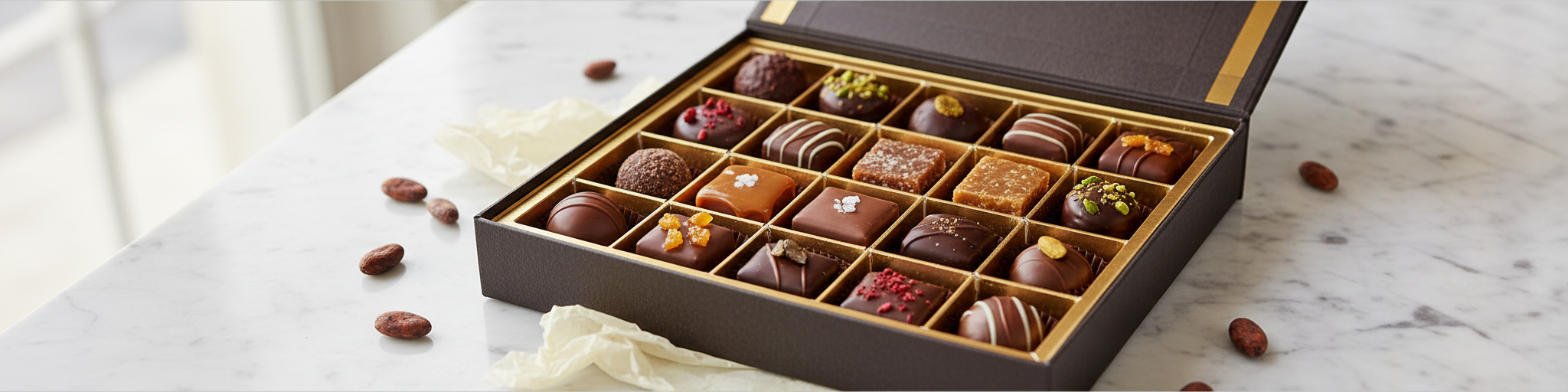
Assorted chocolate boxes are curated symphonies of flavor, texture, and artistry that transform simple confections into multisensory journeys, and this guide equips readers to select, pair, store, and gift them like seasoned connoisseurs. By decoding visual cues—squares for caramels, ovals for ganaches, textured tops for nut clusters—and understanding the spectrum from mass-market uniformity to single-origin artisanal terroir, buyers can match every occasion, from corporate branding to romantic anniversaries, with the perfect 6-piece indulgence or 50-piece showstopper. The article demystifies expert pairings that elevate both chocolate and companion beverages: tannin-management for red-wine harmony, sweetness-mirroring for sparkling whites, and shared roasting notes for coffee synergy, while also spotlighting wellness-forward trends such as adaptogenic matcha and probiotic super-fruits. It arms readers with storage science—63–68 °F, <55 % humidity, airtight barriers against odor migration—and bloom-fix techniques that preserve snap and flavor through shipping, seasons, and gifting re-wraps, ensuring every piece tastes as intended. Ultimately, the guide reveals how to read labels for allergens and ethical sourcing, choose box sizes that balance freshness with abundance, and turn each chocolate into a story of craft, culture, and connection.
What Makes Assorted Chocolate Boxes Unique
Master chocolatiers turn assorted chocolate boxes into edible storybooks—where squares ooze caramel, rounds cradle silky ganache, bumpy surfaces hide nut clusters, and every foil-wrapped piece signals either liquid cherry cordial or premium solid chocolate—so you can decode shapes, textures and colors to instantly know what’s inside before the first satisfying snap.
Defining Assorted Chocolate Boxes
Assorted chocolate boxes represent the pinnacle of chocolate artistry—a thoughtfully orchestrated collection where each piece tells its own story while contributing to a greater narrative. Master chocolatiers follow time-honored traditions when crafting these collections, creating recognizable patterns that guide the tasting journey. Square and rectangular chocolates traditionally house buttercrunch or caramel centers—squares typically embrace soft, flowing caramel while rectangular pieces showcase chewier, more structured textures [1].
Rounded or oval shapes signal the presence of delicate soft fillings like silky ganache or cream-based centers, including classic milk or dark chocolate truffles [1]. The tactile language continues with textured surfaces: chocolates with bumpy exteriors herald nut-based treasures like pecan delights or nut clusters, while foil wrapping traditionally protects liquid centers such as cherry cordials or indicates premium solid chocolate pieces [1]. Skilled chocolatiers also employ visual storytelling on the chocolate surface itself, with colored stripes denoting fruit essences and white dots revealing coconut-filled surprises [1].
These artful compositions reflect evolving palates, with caramel-filled chocolates capturing hearts (30% of consumers), followed by chocolate-covered nuts (23%) [1]. The enduring preference for milk chocolate among nearly half of all chocolate enthusiasts shapes how master chocolatiers balance their assortments [1].
Key Components and Fillings
Quality assorted chocolate boxes showcase the chocolatier's mastery through delicate shells that achieve perfect harmony with their fillings. The finest chocolate coatings demonstrate precision—thin enough to shatter with a satisfying snap yet substantial enough to melt languorously on your palate, creating a seamless dialogue between shell and center [2]. Within these architectural marvels lie carefully crafted fillings designed to evoke emotion and memory. Ganaches—those silken marriages of chocolate and cream—offer infinite variations from bright fruit essences to sophisticated coffee and liqueur infusions. Pralines deliver textural intrigue through toasted nuts suspended in caramelized perfection, while caramels span the spectrum from ethereally soft to luxuriously chewy [3]. The repertoire extends to include marzipan's sweet almond elegance, honey-sweetened nougat studded with roasted nuts, and cordials whose liquid centers require the protective embrace of foil wrapping.
Each element contributes to a symphony of textures that transforms a simple box into a curated experience. The art of composing chocolate assortments balances tradition with innovation. While classic favorites maintain their appeal, contemporary chocolatiers distinguish themselves through imaginative flavor journeys—think brown butter ganache infused with nostalgic cookie dough notes, delicate jasmine tea essences inspired by Vietnamese traditions, or decadent bananas foster centers that evoke New Orleans sophistication. The hallmark of exceptional chocolate lies in achieving exquisite balance—never cloying, never harsh—but rather allowing nuanced flavors to bloom and evolve as they warm on the palate [3]. Quality fillings reveal themselves through impeccable consistency and authentic flavor profiles that speak to the chocolatier's expertise. The philosophy centers on allowing chocolate to maintain its noble character while complementary flavors serve as graceful accompaniments rather than dominating forces.
This delicate equilibrium demands deep understanding of how ingredients interact—how vanilla enhances without masking, how fruit essences brighten without overwhelming, how nuts provide contrast without competing [3]. When evaluating exceptional chocolates, freshness remains paramount, alongside the use of pure, natural ingredients free from artificial interference. True craftsmanship manifests in honest flavor representation—a raspberry truffle should taste of sun-ripened berries, not synthetic approximations. Premium chocolates orchestrate seamless transitions from shell to center, each component elevating the others in harmonious succession.
Texture and Flavor Balance
Texture and flavor balance create the multisensory experience that makes assorted chocolate boxes special. The mouthfeel of chocolate encompasses sensations like smoothness, butteriness, intensity, and astringency [7], while flavor develops primarily through our sense of smell [7].
Quality assortments showcase chocolates with varying notes from fruity and nutty to floral, spicy, earthy, and caramel [5][6], creating a satisfying progression through different pieces. Premium selections carefully balance astringency (the drying, puckering sensation caused by tannins binding with proteins in saliva) with other elements through precise control of cocoa butter content, particle size, roasting techniques, and chocolate thickness [7].
This textural diversity—from silky-smooth ganaches achieved through extended conching to pieces with crunchy inclusions—combined with thoughtful flavor progression provides the complete sensory journey that defines exceptional chocolate assortments.
Artisan vs. Mass‑Market Considerations
Artisanal and mass-market chocolate boxes embody fundamentally different philosophies of chocolate creation. Artisanal chocolatiers, like andSons, honor time-tested European techniques while embracing small-batch production with carefully selected single-origin cocoa beans. This approach celebrates flavor diversity and complexity over uniformity [8], resulting in chocolates with distinctive terroir—fruity notes from Madagascar, floral hints from Ecuador, nutty undertones from Venezuela—each reflecting its unique growing region like fine wine expresses its vineyard [10].
Mass-market producers pursue consistency through bean blending and alkalization processes that neutralize natural flavor variations, often compensating with elevated sugar content [8]. The transparency of ingredient lists tells the story: artisanal chocolates typically contain just cacao, sugar, and cocoa butter, while commercial varieties incorporate emulsifiers, artificial flavors, and preservatives designed for extended shelf stability [8][10]. Texture reveals equally profound differences—artisanal pieces undergo patient conching and precise tempering, developing a dense, creamy architecture that melts in deliberate layers to release complex flavor notes. Commercial alternatives often rely on additives that create quick, uniform melting but may leave an unpleasant waxy finish [10].
Beyond taste, ethical considerations distinguish these approaches, with craft chocolatiers frequently establishing direct farmer relationships and paying premium prices—sometimes eight times commodity rates—while supporting sustainable cultivation practices [9]. The choice between artisanal and mass-market ultimately reflects personal values: whether you seek familiar convenience or prefer embarking on flavor journeys while supporting ethical production. Premium artisanal collections invite deeper appreciation through elegant packaging that shares each chocolate's story—origin details, tasting notes, and ethical certifications that connect you to the craft behind every piece [10].
Selecting the Perfect Assorted Chocolate Box for Every Occasion
Match every moment—birthday bash, romantic anniversary, cozy holiday, or high-stakes client meeting—with the precise chocolate assortment size and flavor theme that turns the occasion into an unforgettable, deliciously tailored experience.
Celebrations and Gifting Scenarios
Chocolate assortments communicate care through occasion-specific selection. Birthday gifts shine with diverse, bold flavors—premium collections featuring 20 or more distinctive hand-painted truffles including unexpected combinations like bananas foster create memorable experiences, while monthly chocolate subscriptions provide ongoing delight [4]. For romance and anniversaries, elegant presentations matter—classic collections in sophisticated packaging with small-batch creams that blend tart fruit with buttery chocolate elevate the gesture [4].
Holiday gifting calls for seasonal flavors like peppermint, eggnog and spiced truffles to capture festive spirit [11]. Host gifts require standout impact—replace standard wine bottles with gold-packaged assortments of 30-35 truffles that prompt appreciative texts after guests depart [4]. When hosting yourself, larger signature boxes of 50 pieces create conversation pieces with vibrantly decorated truffles in flavors ranging from yuzu mango to Sicilian pistachio [4].
Thoughtfully selected chocolates extend beyond celebrations to provide comfort as "get-well" and sympathy gifts [4]. Corporate gifting succeeds when balancing professionalism with personality—artisan truffles in premium packaging with custom notes strengthen business relationships more effectively than standard options [11].
Size and portion guidance
Box size directly impacts both price and consumption timeframe, with most high-quality chocolates best enjoyed within 10 days of receipt [2]. For personal indulgence or intimate sharing, smaller collections of 6-16 pieces provide satisfaction without waste.
A thoughtfully curated 20-piece signature truffle collection strikes an ideal balance for birthdays or self-treats, offering enough variety without overwhelming [4]. Mid-sized assortments (20-32 pieces) work perfectly as host gifts or date night sharing, creating enough abundance for generous sampling while ensuring freshness [4].
For larger gatherings or corporate gifting, premium 50-piece signature boxes create impressive centerpieces that accommodate groups of 8-12 people [4].
Dietary and allergen awareness
Allergen information has become essential when selecting chocolate assortments, with regulations requiring clear labeling of common allergens like nuts, dairy, and soy. The FDA mandates that chocolate labels prominently display allergen warnings and ingredient lists, ensuring consumers with dietary restrictions can make informed choices [12]. This transparency becomes particularly crucial for specialized diets—vegan chocolate assortments replace traditional milk solids with plant-based alternatives like soy or almond milk, creating potential concerns for those with soy allergies [13].
Cross-contamination presents another significant consideration, as facilities often process both allergen-containing and allergen-free products on shared equipment [13]. For those with severe allergies, manufacturers must implement strict cleaning protocols to prevent cross-contamination [13]. European Union regulations add another layer of protection through systems like the Rapid Alert System for Food and Feed (RASFF), which monitors allergen-related issues across member states [12].
When selecting specialty assortments for dietary needs, examine packaging for certifications like "vegan" or "dairy-free," while understanding that these labels don't automatically indicate freedom from all potential allergens [14]. Premium chocolatiers increasingly offer dedicated allergen-free collections, crafted in segregated facilities with ingredients that avoid the eight major allergens: milk, eggs, fish, shellfish, tree nuts, peanuts, wheat, and soy [12].
Custom Branding and Corporate Gifting
Custom chocolate boxes transform standard corporate gifts into memorable brand experiences. Unlike generic promotional items, branded chocolate appeals universally across demographics and creates positive emotional associations [15]. Recipients connect these pleasant feelings with your company, strengthening brand recall and relationship development. Customization options extend beyond simply adding logos—companies can select specific flavor profiles, packaging designs, and even personalized messages that align with brand identity or recipient preferences [17]. This personalization demonstrates thoughtfulness and recognition, particularly effective when tailored to individual tastes [17].
The versatility of chocolate corporate gifts spans numerous business scenarios. Trade shows benefit from branded chocolates that drive booth traffic and facilitate natural conversation starters [16]. Client appreciation programs use chocolate boxes as communication tools that maintain relationships between in-person interactions [16]. Employee recognition events leverage chocolate's perceived luxury value—premium chocolate assortments communicate significant appreciation without excessive cost [15]. Custom chocolate boxes also solve practical gifting challenges.
Their range of sizes accommodates different budgets and occasions, while standard packaging simplifies logistics for distribution at events or direct shipping [16]. The presentation aspects of branded chocolate enhance perceived value; high-quality packaging with subtle branding elements transforms an ordinary confection into a prestigious corporate statement [17]. For maximum impact, choose customizations that balance branding presence with tasteful restraint—recipients appreciate subtle logos on packaging rather than overwhelming promotional elements [15].
Flavor Profiles and Trendy Ingredients in Assorted Chocolate Boxes
Premium assortments win buyers by balancing dark chocolate’s bitter complexity, milk’s crowd-pleasing creaminess, and white’s vanilla-sweet contrast—each piece labeled with its exact cocoa percentage so you know the intensity before you bite.
Classic Milk, Dark, and White Selections
Classic chocolate assortments rely on three foundational varieties that offer distinct experiences. Dark chocolate, containing 60-90% cocoa solids, delivers rich, intense flavor with minimal sugar and pronounced bitterness that intensifies with higher cocoa percentages [18]. Its complex flavor profile often features notes ranging from fruity to earthy, making it the sophisticated anchor in premium assortments [19]. Milk chocolate, containing 30-50% cocoa solids balanced with milk powder or condensed milk, provides the creamy, approachable sweetness preferred by nearly half of chocolate consumers [18].
Its smooth mouthfeel and familiar flavor make it the versatile crowd-pleaser in most collections, often forming the largest proportion of pieces [19]. White chocolate, though technically not true chocolate since it lacks cocoa solids, contains at least 20% cocoa butter combined with milk solids and sugar [19]. This creates its distinctive creamy, vanilla-forward profile that adds visual and textural contrast in assorted boxes [20]. The absence of cocoa solids gives white chocolate its characteristic ivory color, making it immediately identifiable in mixed collections [19].
Quality assortments carefully balance these three types to create sensory variety, with dark pieces offering complexity, milk providing comforting familiarity, and white delivering contrasting sweetness. Premium manufacturers often include specific cocoa percentages on packaging rather than relying solely on generic labels, helping consumers understand the flavor intensity they can expect from each piece [20]. This transparency reflects growing consumer sophistication about chocolate quality, as the percentage directly affects both taste experience and perceived value of the assortment.
Seasonal and Limited‑Edition Flavors
Seasonal and limited-edition chocolate offerings capitalize on both nostalgia and exclusivity. Chocolatiers refresh their product lines throughout the year with flavors that connect to holidays, seasons, and cultural moments. Winter collections feature warming notes like peppermint, eggnog and spiced truffles that capture the festive spirit [3]. These holiday-specific flavors create urgency through their temporary availability.
Spring brings floral-infused ganaches and fruit flavors that mirror seasonal produce, while summer offerings often incorporate refreshing citrus profiles. Compartés exemplifies this approach with their extensive collection of 67 different options that includes limited-edition holiday offerings refreshed throughout the year [4]. These special collections serve multiple purposes beyond variety—they drive repeat purchases from collectors eager to experience new flavor combinations before they disappear. Premium chocolatiers often announce seasonal releases with fanfare, turning them into anticipated events that generate excitement among enthusiasts.
Beyond standard holiday themes, many artisans draw inspiration from seasonal ingredients at peak freshness, incorporating just-harvested fruits, newly-foraged herbs, or special-edition spice blends. This connection to seasonality appeals to consumers increasingly focused on ingredient sourcing and authenticity. Recchiuti Confections, for example, creates special holiday assortments with flavors like Star Anise & Pink Peppercorn that showcase these ephemeral ingredient combinations [3]. The tactile experience extends beyond flavor to presentation, with seasonal assortments featuring distinctive packaging that complements the flavors inside—golden wrappers for holiday collections, pastel boxes for spring, and vibrant patterns for summer releases.
Incorporating Superfoods and Global Inspirations
The chocolate industry is rapidly embracing superfoods and global flavors to create distinctive assortments with functional benefits. Innovative chocolatiers now incorporate ingredients like matcha, saffron, turmeric, and edible flowers that add both exotic flavor profiles and potential health advantages [21]. These nutrient-dense additions transform traditional chocolate boxes into wellness-oriented experiences, with adaptogens and functional ingredients targeting specific health outcomes. Chocolate infused with calming elements like chamomile and lavender appeals to consumers seeking stress relief and emotional balance [21], while others feature antioxidant-rich additions that support immunity and overall wellbeing. Global inspirations have revolutionized flavor profiles in premium chocolate collections. Japanese matcha, Spanish saffron, and Italian limoncello create distinctive cultural experiences within a single assortment [22].
This international approach extends to spice integration, with chocolatiers experimenting with chili, cardamom, cumin, and turmeric to create complex, sophisticated flavor combinations [22]. The traditional boundaries between sweet and savory continue to blur, with sea salt and herb combinations becoming increasingly common in high-end collections [22]. These innovations respond to growing consumer sophistication about chocolate's origin story and nutritional potential. Superfoods in chocolate align perfectly with the expanding plant-based market, projected to exceed $1. 444 billion by 2032 [22]. Premium assortments increasingly feature nutrient-dense fruits, which constitute nearly 30% of the superfoods market [23].
The wellness-oriented chocolate trend goes beyond simply adding healthy ingredients—it transforms chocolate from an occasional indulgence into a functional food. Modern collections often highlight adaptogens, probiotics, and other wellness-focused components that promise benefits beyond basic nutrition [23]. This shift toward functional chocolate aligns with consumer interest in preventative healthcare, with the preventative health market growing at approximately 22% CAGR [23]. For chocolatiers, this represents an opportunity to create truly distinctive assortments that differentiate through both flavor innovation and wellness positioning.
Pairing with Coffee, Tea, and Spirits
Pairing chocolate with beverages creates elevated tasting experiences that transform both elements. Coffee and chocolate share parallel production processes—both begin as seeds of tropical fruits that undergo fermentation, drying, and roasting—making them natural companions [24]. Successful pairings work by either matching similar notes (like Vietnamese coffee with Haitian chocolate sharing peppery qualities) or creating contrasting profiles that balance each other [25].
Specialty roasters and craft chocolatiers both focus on preserving inherent flavor profiles rather than obscuring them with heavy roasting [25]. Coffee preparation methods significantly impact pairings, with shops like Cup & Bar offering tasting flights featuring the same coffee prepared three ways (pour-over, espresso, and cortado), each matched with specific chocolates [25]. Practical pairings include milk-chocolate caramels with black coffee, where the hot liquid slightly melts the chocolate and softens the center, creating an enhanced texture experience [25].
Tea offers more subtle interactions, creating moments for contemplative indulgence, while spirits like whiskey and rum elevate chocolate to sophisticated tasting experiences [24]. The most memorable combinations emerge through experimentation, as demonstrated by tasting events where participants frequently discover their favorite pairings don't always include their individually preferred components [25].
Expert Pairing Strategies: Wine, Coffee, and Beyond
Master unforgettable pairings by matching complementary aromas, contrasting at least two tastes, and layering textures—taste chocolate and companion separately first, then let dark chocolate’s bitterness balance creamy foods or stand up to full-bodied reds while milk chocolate softens alongside Pinot Noir.
Fundamentals of Chocolate Pairing
Masterful chocolate pairing elevates both elements to create unforgettable sensory experiences. Understanding four key flavor components unlocks this artistry: taste, aroma, mouthfeel, and texture. Taste identifies five basic sensations (sweet, salty, sour, bitter, umami), while aroma—responsible for 80% of flavor experience—distinguishes countless odorant molecules [26]. Mouthfeel encompasses physical effects like smoothness or astringency, and texture spans qualities from crunchy to velvety [26].
Expert pairing requires complementary aromas between chocolate and its companion, at least two contrasting tastes for complexity, and multiple contrasting textures for dimension [26]. For example, astringent dark chocolate pairs beautifully with creamy, fatty foods like cheese because the contrasting mouthfeels create exquisite balance [26]. Before attempting pairings, taste each element separately to establish baseline flavor profiles [26]. Premium chocolate's versatility stems from its aromatic complexity—fine-flavor cacao offers notes ranging from fruity and floral to nutty and earthy, similar to wine's terroir-based distinctions [26].
This sophistication explains why quality chocolate complements everything from vintage wines and aged spirits to specialty coffees and rare teas [24]. When evaluating potential matches, consider how sweetness levels interact; darker chocolates with intense bitterness require robust companions like full-bodied reds or dark roast coffees [27]. Milk chocolate's creamier profile pairs elegantly with softer reds like Pinot Noir or medium-roast coffees that won't overpower its subtle notes [27]. The most memorable pairings often emerge through thoughtful experimentation rather than rigid rules, as individual preferences significantly influence perception of flavor combinations [26].
Red Wine Matches for Dark Chocolates
Pairing red wines with dark chocolate demands sophisticated understanding of their chemical interaction. Both contain high levels of flavanols (tannins) that can clash when combined incorrectly, transforming wine's character to bitter and sour notes [28]. Master sommeliers focus on balancing intensity levels and complementary flavor profiles rather than competing elements.
Port creates an exceptional match with intense dark chocolate, as its concentrated sweetness and opulent texture stands up to dark chocolate's boldness while contributing nutty, caramel notes that evolve with each luxurious taste [29]. Cabernet Sauvignon works particularly well with 70-85% cocoa chocolates that feature earthy or fruity undertones, creating a harmonious balance between the wine's structured tannins and chocolate's intensity [29]. When selecting red wines for chocolate pairings, seek options with softer, more integrated tannins to prevent overwhelming bitterness [29].
This becomes especially crucial with higher percentage cacao chocolates, where the combined tannin load can create unpleasant astringency. While a glass of Cabernet with dark chocolate sounds appealing, this combination often disappoints unless expertly balanced [28]. The transcendent chocolate and red wine experience depends on exceptional quality—single-origin chocolates with distinct flavor profiles pair more successfully than mass-produced alternatives, allowing the subtle interplay between elements to develop gradually and reveal hidden complexities [29].
White & Sparkling Wine with Milk and White Chocolates
White and sparkling wines create surprisingly sophisticated pairings with milk and white chocolates when approached with finesse. The cardinal rule: match sweetness levels precisely—if the chocolate is sweeter than the wine, the wine will taste thin; if the wine is sweeter, the chocolate's delicate nuances disappear [30]. Riesling Spätlese offers an ideal match for premium white chocolate, as its natural acidity prevents cloying sweetness while orchard-fruit flavors complement cocoa butter's luxurious plushness [30].
For milk chocolate connoisseurs, consider off-dry sparkling wines that refresh the palate between indulgent bites. A lightly sweet Lambrusco served perfectly chilled works particularly well, as its gentle effervescence cleanses the palate while preserving exquisite flavor harmony [30]. Blanc de blancs sparkling wine with subtle sweetness provides another distinguished option, threading citrus, apple, and cream notes through milk chocolate's silky texture [30].
When curating wines for these pairings, avoid high-acid, lean styles that might create angular flavor experiences—instead, choose wines with textural richness that mirror the chocolate's sumptuous mouthfeel [30]. This refined approach creates perfectly balanced combinations where neither element overwhelms the other, allowing fruit, spice and effervescence to create an elegant bridge between wine and chocolate [30].
Coffee and Tea Complementary Pairings
Coffee and chocolate share profound flavor affinities that create transcendent tasting experiences. The robust notes in specialty coffee enhance chocolate's complexity while chocolate tempers coffee's acidity, creating sophisticated balance that highlights the finest qualities of both. Dark chocolates pair sublimely with espresso drinks, where the coffee's intensity complements chocolate's depth without overwhelming its nuanced character [31]. For milk chocolate aficionados, medium-roast coffee offers complementary caramel notes that enhance chocolate's velvety creaminess [31].
Tea creates equally compelling yet more delicate chocolate experiences through its diverse flavor profiles. Premium white chocolate finds its perfect match in floral jasmine tea, creating an ethereal, aromatic experience that highlights tea's subtlety [32]. Dark chocolate benefits from pairing with robust black teas, which provide sufficient tannins to balance chocolate's richness while unveiling hidden flavor notes [32]. Contemporary chocolatiers now craft specialty tea-infused pieces specifically designed for optimal pairing experiences, with andSons' collections featuring expertly balanced flavor profiles that harmonize beautifully with corresponding beverages. When exploring these pairings, engage all senses—observe how the warm beverages gently melt the chocolate, releasing intoxicating aromatics and creating textural contrast between the liquid and the gradually softening chocolate [31]. This creates a mindful tasting ritual where flavors evolve with each sip and bite, revealing complex interactions impossible to achieve with either element alone.
Storage, Shelf Life, and Presentation Best Practices
Keep your chocolate at 63-68°F and below 55% humidity in an airtight container, and dark solid bars can stay pristine for over a year while filled truffles must be enjoyed within two weeks.
Optimal Temperature and Humidity
Chocolate quality depends heavily on storage conditions, with temperature and humidity being the most critical factors. The ideal environment maintains chocolate between 63-68°F (about 17-20°C) with humidity below 55% [34][36]. This temperature range prevents cocoa butter from separating while preserving the delicate crystal structure that gives chocolate its distinctive snap and mouthfeel. Storage above 70°F risks melting and bloom formation—that harmless but unappealing white coating that occurs when fat or sugar rises to the surface [34][36].
Humidity control prevents sugar bloom specifically, which happens when moisture dissolves sugar within the chocolate that later recrystallizes on the surface [35]. Different chocolate varieties require slightly different considerations; dark chocolate maintains quality longest due to its lower milk content, while milk and white chocolates deteriorate faster because of their dairy components [35]. Filled chocolates in assortments have significantly shorter shelf lives—about two weeks at proper temperature—compared to solid chocolates that can last 6-12 months or even years when stored optimally [35]. When temperature control becomes impossible during summer months, wine refrigerators set to 50°F provide an excellent alternative to standard refrigeration [35].
If using a conventional refrigerator becomes necessary, chocolates should be tightly wrapped and sealed in airtight containers to protect against odor absorption and condensation [36]. Always allow refrigerated chocolate to return completely to room temperature before unwrapping to prevent moisture damage [36].
Packaging Techniques to Preserve Freshness
Proper packaging plays a critical role in preserving chocolate's delicate flavors and appearance. Airtight containers protect chocolate from its greatest enemies: oxygen, moisture, and odors. Oxygen oxidizes chocolate, developing off-flavors, while nearby food odors can be absorbed through chocolate's high cocoa butter content [36]. Premium chocolatiers use specialized wrapping techniques that create complete seals around individual pieces before placing them in structured boxes that prevent crushing.
For assortments with varied fillings, proper packaging becomes even more crucial, as ganache centers have significantly shorter shelf lives (4-6 weeks) compared to solid chocolates [37]. High-end chocolate boxes often include layered protection: food-grade tissue paper isolates individual pieces, while structured dividers prevent migration of flavors between different fillings. When shipping is necessary, specialized insulation systems maintain temperatures below chocolate's 72°F softening point [37]. These include reflective liners and strategically-sized gel packs calibrated to transit duration.
For extreme temperature conditions, some premium chocolatiers use phase-change materials that absorb and release heat at specific temperature thresholds, maintaining stable conditions despite external fluctuations. Effective packaging must balance preservation with presentation—the unboxing experience creates anticipation while protective elements ensure each piece arrives exactly as the chocolatier intended [37].
Re‑Packaging for Gifting and Events
Transforming store-bought chocolate assortments into personalized gifts requires techniques that preserve quality while enhancing presentation. With the chocolate gift market projected to reach $25 billion by 2025, distinctive packaging has become crucial [39]. Start with food-safe, moisture-resistant materials that create airtight seals, then layer chocolates in decorative boxes with parchment or tissue for protection [38]. Create personalized experiences through custom wrappers with names or messages, themed jars with sentiment labels like "For quiet moments," or edible chocolate bouquets as alternatives to flowers [39].
For interactive gifting, repackage assortments as tasting kits with scoring cards that turn consumption into an experience [39]. Choose quality finishing materials—satin or grosgrain ribbons provide both beauty and structural integrity [38]. At andSons Chocolatiers, our Beverly Hills heritage influences our approach to gift presentation, where European craftsmanship meets California sophistication.
When reusing gift boxes, thoroughly clean and refresh them with new tissue or ribbons [38]. Effective repackaging balances preservation with presentation, creating an anticipatory unboxing experience while ensuring chocolates remain in perfect condition [38][39].
Extending Shelf Life Without Compromising Quality
Chocolate's naturally low water activity (0. 3-0. 4) and high flavanol content create inherent preservative properties that prevent spoilage in ways other foods experience [41]. While chocolate doesn't "go bad" in the traditional sense, its quality—texture, appearance, and flavor complexity—can degrade without proper storage.
To maximize shelf life without compromising quality, maintain the consistent environment detailed above—between 65-68°F with humidity below 55%—which preserves the critical emulsion of cocoa solids and cocoa butter [36]. This temperature range prevents fat migration that causes bloom while preserving chocolate's signature snap and mouthfeel. When temperature control becomes challenging, avoid refrigeration if possible, as condensation and odor absorption quickly compromise quality [40]. If refrigeration becomes unavoidable during extreme heat, first wrap chocolate tightly, then seal in an airtight container before refrigerating [36].
When removing from cold storage, allow wrapped chocolate to gradually reach room temperature before opening to prevent condensation that causes sugar bloom [40]. For truly long-term storage (6-12 months), freezing becomes viable if done properly: move chocolate from room temperature to refrigerator for 24 hours, then to freezer to prevent temperature shock [41]. Reverse this process when thawing to maintain texture integrity. Even if bloom occurs despite best efforts, this aesthetic issue doesn't affect safety or flavor—simply melt the chocolate to reincorporate the separated fats or sugars for complete restoration [41].
- Square chocolates signal soft caramel; rectangles hold chewier fillings; bumpy tops mean nuts; foil wraps protect liquid centers.
- Filled chocolates last ~2 weeks at 63-68°F and <55% humidity; solid bars keep 6-12 months.
- Pair dark chocolate with Port or off-dry sparkling wines; match sweetness levels to avoid dulling flavors.
- Artisanal boxes highlight single-origin cacao and ethical sourcing; mass-market versions blend beans for uniformity.
- Seasonal collections drive repeat purchases—rotate peppermint for winter, floral fruits for spring, citrus for summer.
- Custom corporate boxes with subtle logos create stronger brand recall than generic promotional items.
- Refrigeration risks condensation and odor absorption; if unavoidable, wrap airtight and temper gradually to room temperature.
- https://www.realsimple.com/food-recipes/shopping-storing/box-chocolates
- https://www.seriouseats.com/best-chocolate-boxes-8414371
- https://www.nytimes.com/wirecutter/gifts/best-boxed-chocolates/
- https://www.tasteofhome.com/collection/best-box-of-chocolates/
- https://anarchychocolate.com/science-of-chocolate-flavours-textures/
- https://cocoanusa.com/articles/chocolate-flavour-profile/
- https://cocoarunners.com/chocopedia/how-to-taste-astringency/
- https://toskachocolates.com/pages/artisanal-and-commercial-chocolates-know-the-difference
- https://mahoganychocolate.com/craft-chocolate-vs-commercial-chocolate/
- https://chocolateaffairsmagazine.com/artisan-vs-commercial-chocolate/
- https://cocoanusa.com/articles/chocolate-labeling-requirements/
- https://davieschocolates.com.au/everything-you-need-to-know-about-vegan-chocolate-and-allergies/
- https://raylucachocolate.com/blogs/news/the-ultimate-guide-to-choosing-the-perfect-gourmet-chocolate-box-for-vegans
- https://totallychocolate.com/blog/11-reasons-why-custom-chocolate-makes-for-the-perfect-corporate-gift/?srsltid=AfmBOopkWWcYW1qkFKCCubvf6_XeFg1xGIFl6yzwSuAwNIL1TY4ntlmt
- https://teuschersf.com/giving-clients-a-chocolate-corporate-gift-set/
- https://cococochocolatiers.com/blogs/chocolate-blog/4-benefits-of-customization-in-corporate-chocolate-gifts?srsltid=AfmBOoo94k98ghLvj9uJxXpFcAUsKKP6bKSS15CeSVSNZY04nWESxTv6
- https://thesweettooth.com/blogs/news/dark-milk-or-white-which-type-of-chocolate-is-right-for-you?srsltid=AfmBOoqQaFptcJIBip9-2A2y9Ot73eQ5EynEV4KfMnhJUq83OQU_s7Dk
- https://gastrovinoacademy.com/2022/12/19/what-is-the-difference-between-dark-milk-and-white-chocolate/
- https://gygi.com/blogs/news/the-real-difference-between-milk-semi-sweet-dark-white-chocolate-and-why-the-ratios-are-never-exact?srsltid=AfmBOortJ9QEzaApFGdLY592dt828p3O0VEEeG5tg8KWdjwQyAPhG3wG
- https://www.amarorganics.com/chocolate-confectionery-top-flavours-2026/
- https://cremefilledchurros.com/chocolate-trends-in-2025/
- https://www.imarcgroup.com/superfoods-market
- https://www.lechocolatier.com/blogs/blog/the-art-of-chocolate-pairing-perfect-matches-for-wine-coffee-and-more-this-holiday-season
- https://freshcup.com/pairingscoffeeandchocolate/
- https://toakchocolate.com/blogs/news/the-art-science-of-food-pairing
- https://tomschocolates.com/blog/how-to-pair-chocolate-with-wine-or-coffee-for-valentine-s
- https://winefolly.com/wine-pairing/what-wines-to-pair-with-chocolate/
- https://www.davisestates.com/blog/chocolate-wine-pairing/
- https://www.foodandwine.com/pairing-wine-and-chocolate-11843685
- https://chuaochocolatier.com/blogs/blog/the-chocoholics-guide-to-coffee-and-tea-pairings?srsltid=AfmBOopICFuPLPE4E3-EFx_lbdwH0PC7pqtpHG2sK2QIiknDrnRZsFPB
- https://dallmannconfections.com/blogs/chocolate/unique-pairings-for-your-custom-gourmet-chocolate-boxes?srsltid=AfmBOophkFT5gclQO31BxcaH8KWFXqwe0iolauAPbONtoZ81J41sBEY1
- https://www.thechocolatetherapist.com/product/chocolate-for-pairing-with-tea/
- https://totallychocolate.com/blog/how-to-store-chocolate-properly-and-extend-its-shelf-life/?srsltid=AfmBOopsCo3WSKnEu3I51KBOHirbNKBQmDLZWr41I9KP6CM7bde_8c6i
- https://www.epicurious.com/expert-advice/how-to-store-chocolate
- https://www.lakechamplainchocolates.com/how-to-store-chocolate/
- https://and-sons.com/blogs/journal/milk-chocolate-boxes-creamy-delights-for-every-occasion?srsltid=AfmBOoqj91CNR9FYKeW_Y_pne0KDJ45O98w3XTi4oBAIqrxf2kYKYZsK
- https://smart.dhgate.com/how-to-wrap-chocolate-for-gift-giving-creative-ideas/
- https://vocal.media/feast/7-creative-ways-to-present-chocolate-gifts-for-holidays-and-events
- https://totallychocolate.com/blog/how-to-store-chocolate-properly-and-extend-its-shelf-life/?srsltid=AfmBOopTM-JAuW1lXTn9WaRQ7eRBAs4hHBWCCE72TyBpLVEW0FsHcBje
- https://blogs.extension.iastate.edu/answerline/2023/11/07/chocolate-shelf-life-storage-and-bloom/